Orders to an overseas duty station come with a housing benefit most service members have never used: the Overseas Housing Allowance, or OHA. If every PCS you have made so far was inside the United States, you have been drawing BAH, or Basic Allowance for Housing, a single flat monthly rate. OHA works differently, and understanding the difference before you sign a lease can save you a real headache at your new duty station.
This guide covers what OHA actually pays for, how the three pieces fit together, and the paperwork that turns your lease into a monthly payment.
What OHA Covers and Who Gets It
OHA is a reimbursement for privately leased housing at a permanent overseas duty station, according to the Defense Travel Management Office, the DoD office that administers it. It applies once you are stationed OCONUS, meaning outside the continental United States, and it is not the same benefit as the Temporary Lodging Allowance you may draw for a short window right after you arrive. If you are still working out what happens between report date and move-in, our OCONUS Temporary Lodging Allowance guide covers that gap.
To draw OHA you generally need command-sponsored, accompanied or unaccompanied orders to an overseas location and government-leased or privately leased housing rather than a spot in on-post government quarters. If government housing is available and you are assigned to it, OHA does not apply, since the allowance exists to offset the cost of a lease you are paying yourself.
The Three Parts of Your OHA Payment
OHA is not one number. It is built from three separate allowances that add up to your total monthly benefit.
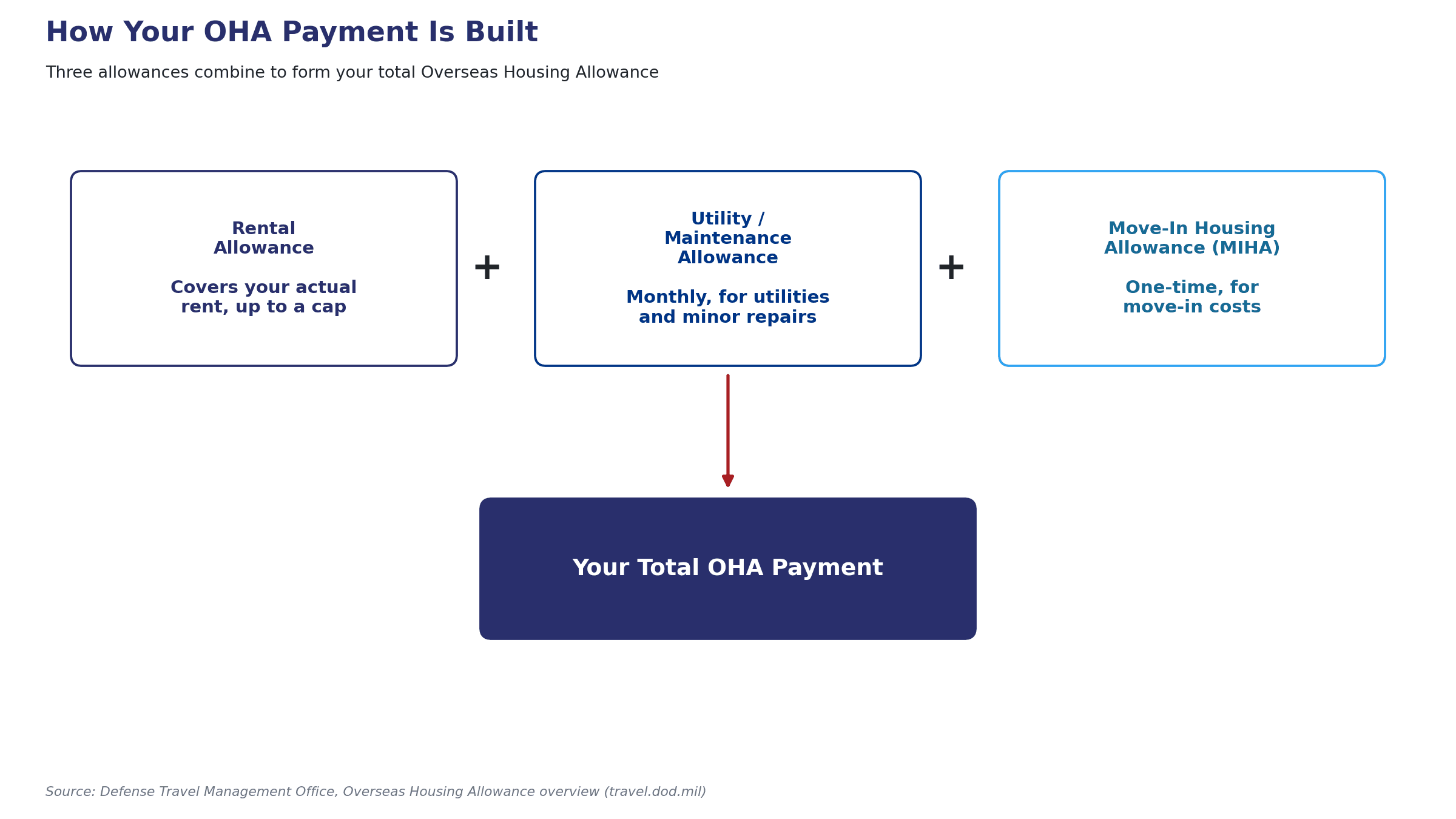
Rent, utilities, and one-time move-in costs are calculated separately, then combined. Source: Defense Travel Management Office.
Rental Allowance reimburses your actual rent, up to a location-specific maximum. DTMO sets that maximum so that, per its methodology, roughly 80 percent of members with dependents have their full rent covered. If your rent falls under the cap, you are reimbursed the full amount. If it runs over, the allowance stops at the cap and the difference comes out of your own pocket, so it pays to know the ceiling before you sign anything.
Utility/Recurring Maintenance Allowance is a separate monthly payment meant to cover utility bills and minor repairs, calculated the same way as the rental piece. It is paid whether or not your actual utility costs match it exactly.
Move-In Housing Allowance (MIHA) is a one-time, lump-sum payment rather than a monthly one. DTMO breaks it into sub-categories covering miscellaneous move-in costs, rent-related expenses like a broker's fee, security enhancements, infectious disease prevention, and safety upgrades such as smoke detectors or window guards where local housing does not already have them.
OHA vs. BAH: What's Different
If this is your first OCONUS move, the biggest adjustment is that OHA responds to your actual lease, where BAH does not.
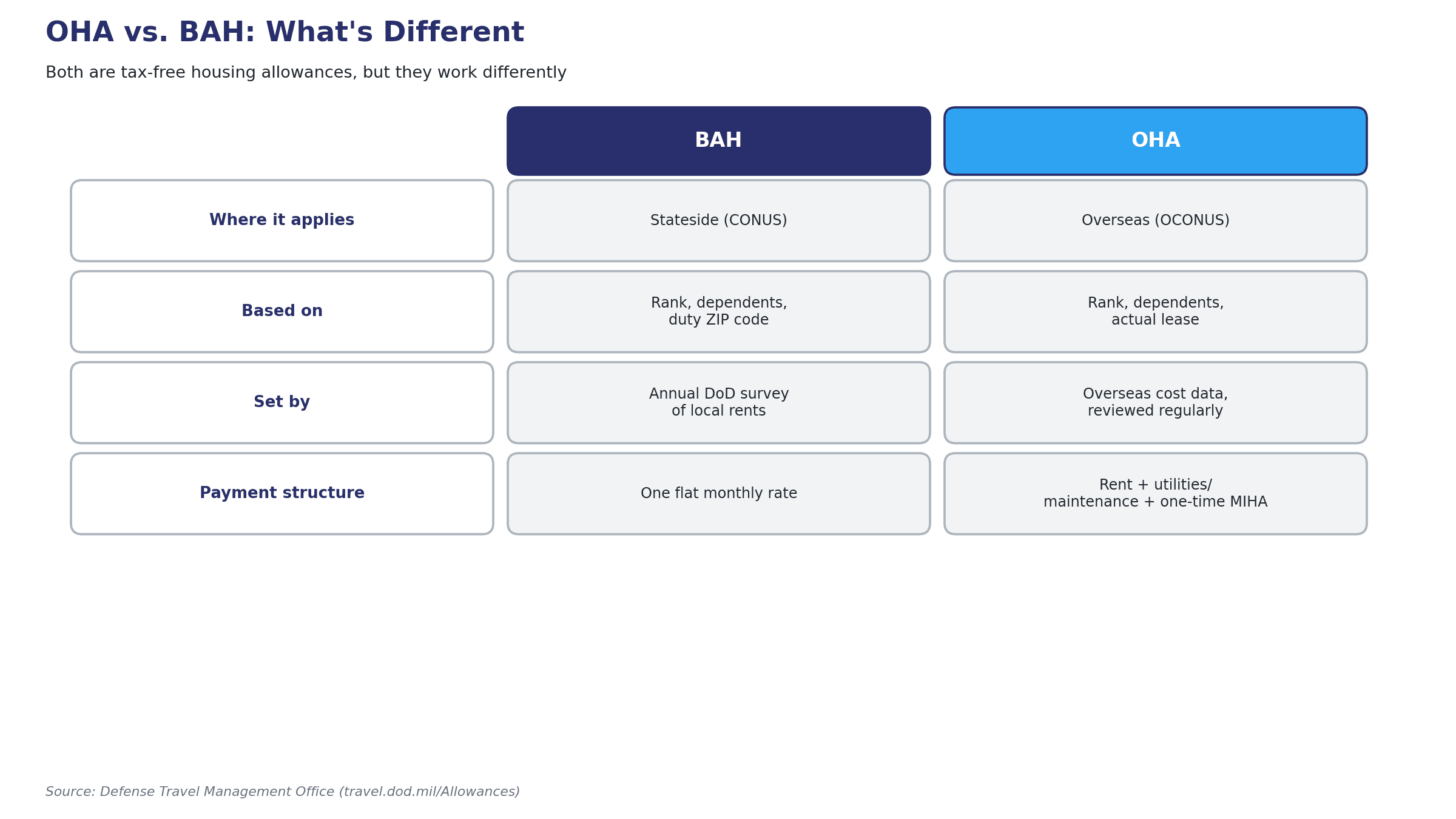
Both allowances are tax-free, but OHA ties directly to what you actually pay in rent. Source: Defense Travel Management Office.
BAH pays the same flat rate to everyone at your rank and dependency status in a given ZIP code, whether you rent a small apartment or a large house at that rate. OHA is closer to a true reimbursement: it moves with your lease, up to the cap, which means signing a lower rent does not put extra money in your pocket the way an under-market BAH rental sometimes can stateside.