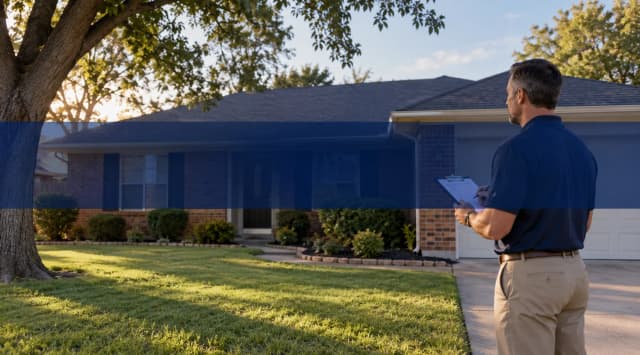

Leaving the military is one of the biggest transitions you will ever make. For the first time in years, you get to decide where you want to live instead of waiting on your next set of PCS orders. PCS stands for Permanent Change of Station, the military term for a move to a new duty station. Buying a home after military service is one of the largest financial decisions that follows, and it is worth slowing down enough to get right.
The good news is that your hardest-earned housing benefit does not expire the day you out-process. Here is what carries over, what to line up first, and where to get help from people who have done this themselves.
Your Transition Checklist
- Request your Certificate of Eligibility to confirm your VA loan eligibility
- Download the free VA Loan Guide and the First-Time Homebuyer Guide
- Run the numbers in the VA Loan Mortgage Calculator
- Get pre-approved with a VeteranPCS VA Loan Expert
- Match with a VeteranPCS real estate agent in the state you are moving to
- Confirm your VeteranPCS Move-In Bonus before you go under contract
Can You Still Use Your VA Loan After You Separate?
Yes. The VA loan benefit belongs to you based on your service, not your current duty status. VA stands for the U.S. Department of Veterans Affairs, which backs the loan so private lenders can offer better terms.
To prove eligibility you need a Certificate of Eligibility, usually shortened to COE. According to VA.gov's eligibility page, veterans who served any time from August 2, 1990 to the present generally meet the service minimum with at least 24 continuous months of active duty, or the full period of at least 90 days for which they were called to active duty. Shorter service can still qualify if you were discharged for a service-connected disability or under a qualifying exception such as hardship or an involuntary reduction in force. National Guard and Reserve members can qualify through 90 days of non-training active-duty service or six creditable years.
You will need your DD214, the discharge paperwork that documents your service, to request the COE. You can request it online through the VA, or ask your lender to pull it for you, which is usually faster.
One thing worth knowing early: if you sold the home you bought with a previous VA loan and paid that loan off in full, you can restore that entitlement and use the benefit again. Our guide to VA loan entitlement walks through how that works.
What the VA Loan Still Gives You
The core advantages do not change when you take off the uniform. Qualified borrowers can buy with no down payment and no monthly mortgage insurance. Private mortgage insurance, or PMI, is the extra monthly charge conventional lenders add when a buyer puts down less than 20 percent. VA loans do not carry it, which is often worth a few hundred dollars a month.
What you do pay in most cases is the VA funding fee, a one-time cost that keeps the program running. The rates below come from VA.gov's funding fee chart, effective April 7, 2023 and current as of the page's January 15, 2026 update.
| Your down payment | First use of the benefit | After first use |
|---|---|---|
| Less than 5% | 2.15% | 3.3% |
| 5% or more | 1.5% | 1.5% |
| 10% or more | 1.25% | 1.25% |
The fee is a percentage of the loan amount, not the purchase price, and it can be rolled into the loan instead of paid at closing.
Here is the part many separating service members miss. You do not owe the funding fee at all if you are receiving VA compensation for a service-connected disability, or if you are eligible for that compensation but receiving retirement or active-duty pay instead. If a disability claim is in progress as you separate, the timing of your rating relative to your closing date matters. Talk to your lender about it before you sign anything.
Free VA Loan Guide: how the benefit works, start to finish
How Much House Can You Afford?
Start with the VeteranPCS VA Loan Mortgage Calculator to get a rough picture. Then get pre-approved with a VA Loan Expert before you tour a single home. Pre-approval is what turns a number in your head into an offer a seller will take seriously.
Your income picture changes at separation, and that catches people off guard. Basic Allowance for Housing, or BAH, stops. If you are retiring, your pension counts as income. If you have a disability rating, that compensation usually counts too, and it is not taxed. If you are starting a civilian job, most lenders want to see an offer letter with a start date, and self-employment income typically needs a two-year history. Bring all of it to your lender early rather than discovering a gap in week three of house hunting.
Planning Your Next Move?
Connect with Veteran & Military Spouse Real Estate Agents and VA Loan Experts You Can Trust.
Two more posts worth reading before you start: how a $0 down VA loan actually works and 10 essential questions for first-time military home buyers.
Now You Get to Choose Where You Live
This is the genuinely new part. No orders, no assignment officer, no list of three bases. The tradeoffs are yours.
Think through where the civilian jobs in your field actually are, what the commute looks like, how the schools rate, whether family is nearby, and what the state does to your money. Many veterans specifically look at states with disabled veteran property tax exemptions or states that do not tax military retirement pay, and the differences are large enough to change which house you can afford. Our state-by-state breakdowns, like the one for Colorado veteran property tax exemptions, cover what each state offers.
If you are still on active duty and planning your last move, house hunting leave is the tool to use for scouting trips before you separate.
First-Time Homebuyer Guide: what to expect at every step
Mistakes to Avoid in Your First Year Out
- Working with a lender who rarely closes VA loans and treats the paperwork as unfamiliar
- Paying fees a VA-experienced lender would have caught and removed
- Skipping pre-approval and losing a house to a buyer who had it
- Assuming you owe the funding fee when a disability rating may exempt you
- Choosing an agent who has never handled a transition timeline or a relocation from out of state
- Buying at the very top of your approval amount in the same month your income structure changes
The fix for most of these is the same. Work with people who do this for military families all day and who will answer the phone on a Saturday when you find the right house.
Your VeteranPCS Move-In Bonus
Eligible buyers and sellers receive a VeteranPCS Move-In Bonus at closing, and we donate 10 percent of it to military charities on your behalf. Move the slider to see what your bonus would be.

Estimated VeteranPCS Bonus
Adjust the slider to estimate your VeteranPCS bonus. We can confirm your options when we match you with an agent.
VeteranPCS Bonus
$1,000
* Bonus amounts are estimates and may vary based on final purchase price and actual commission rates.
How VeteranPCS Helps
VeteranPCS is completely free to use. We connect you with veteran and military spouse real estate agents and trusted VA Loan Experts across all 50 states, people who understand orders, entitlement, and the timeline you are actually working with. We promote veteran-owned businesses across the network and give back to military organizations.
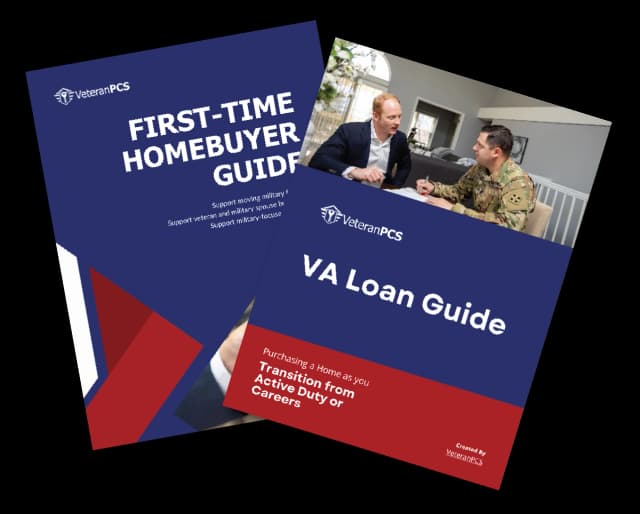
Free First-Time Homebuyer Guide
Make your move less stressful with our step-by-step first-time homebuyer guide.
We respect your privacy. Unsubscribe anytime.Jessica Brown handles those matches. Tell her the state you are headed to and she will connect you with an agent who knows that market and a lender who closes VA loans every week.

Have a question about your situation? Send it over and get a straight answer — no cost, no obligation.
Frequently Asked Questions
Does my VA loan benefit expire after I separate?
No. There is no expiration date on VA home loan eligibility. Your eligibility is based on your service history and character of discharge, not on whether you are currently serving.
Do I need a COE before I start looking at homes?
You do not need it in hand to browse, but you need it before a lender can issue a real pre-approval. Most lenders can pull your Certificate of Eligibility electronically in minutes, so it is worth doing early.
Can I use a VA loan if I am buying with a civilian spouse?
Yes. A VA loan can be made to a veteran and their spouse without reducing the guaranty. Your lender will still count both incomes and both credit profiles when they underwrite the loan.
What if my discharge was other than honorable?
You may still be able to qualify. The VA reviews service records case by case, and you can apply for a discharge upgrade or request a Character of Discharge review. Start at VA.gov and ask a VA-experienced lender to help you read the result.
How soon after separation can I close on a home?
There is no waiting period tied to your separation date. The practical limit is your income documentation. Lenders generally want to see your first civilian pay stubs or a signed offer letter with a start date, so line that up before you go under contract.
Ready to Put Down Roots?
Whether you are twelve months from your separation date or already out, start with the free VA Loan Mortgage Calculator and the free guides, then let us match you with a VeteranPCS agent and VA Loan Expert who have been where you are. Together, we'll make it home.
If you found this useful, share it with someone in your unit who is starting their transition.
This content is for informational purposes. Consult a professional for personal financial decisions.