

If you already have a VA (Department of Veterans Affairs) home loan and rates have dropped since you bought, the VA IRRRL may be the simplest way to lower your monthly payment. IRRRL stands for Interest Rate Reduction Refinance Loan, and most people just call it the VA streamline refinance. It is designed to be fast and low-cost: less paperwork, a small funding fee, and in many cases no new appraisal and no income check. This guide explains how the VA IRRRL works, who qualifies, and how to tell whether refinancing is worth it.
What Is a VA IRRRL?
A VA IRRRL replaces your current VA loan with a new VA loan at a lower interest rate. It is called a streamline because the VA cut out much of the work required for a regular loan. You cannot use an IRRRL to pull cash out of your home or to refinance a non-VA loan; its one job is to lower the rate, and with it the monthly payment, on a loan you already have.
Because rates move over time, refinancing can make sense when they fall. As of July 9, 2026, Freddie Mac reported the average 30-year fixed mortgage rate at about 6.49 percent. If your current VA loan sits well above today's rates, an IRRRL is worth a look. For the bigger refinance picture, see should you buy now and refinance later.
How the VA IRRRL Is Different
Compared with your first VA purchase loan, the streamline skips several steps.
- Often no new appraisal is required, so you are not tied to a fresh home value.
- Income and employment verification are usually limited or waived.
- The VA funding fee is just 0.5 percent of the loan, far below a purchase loan's fee.
- You must already have a VA loan on the home; the IRRRL refinances that loan.
The low funding fee is a major reason the streamline is popular. According to VA.gov, the IRRRL funding fee is 0.5 percent, and it can be rolled into the new loan instead of paid in cash.
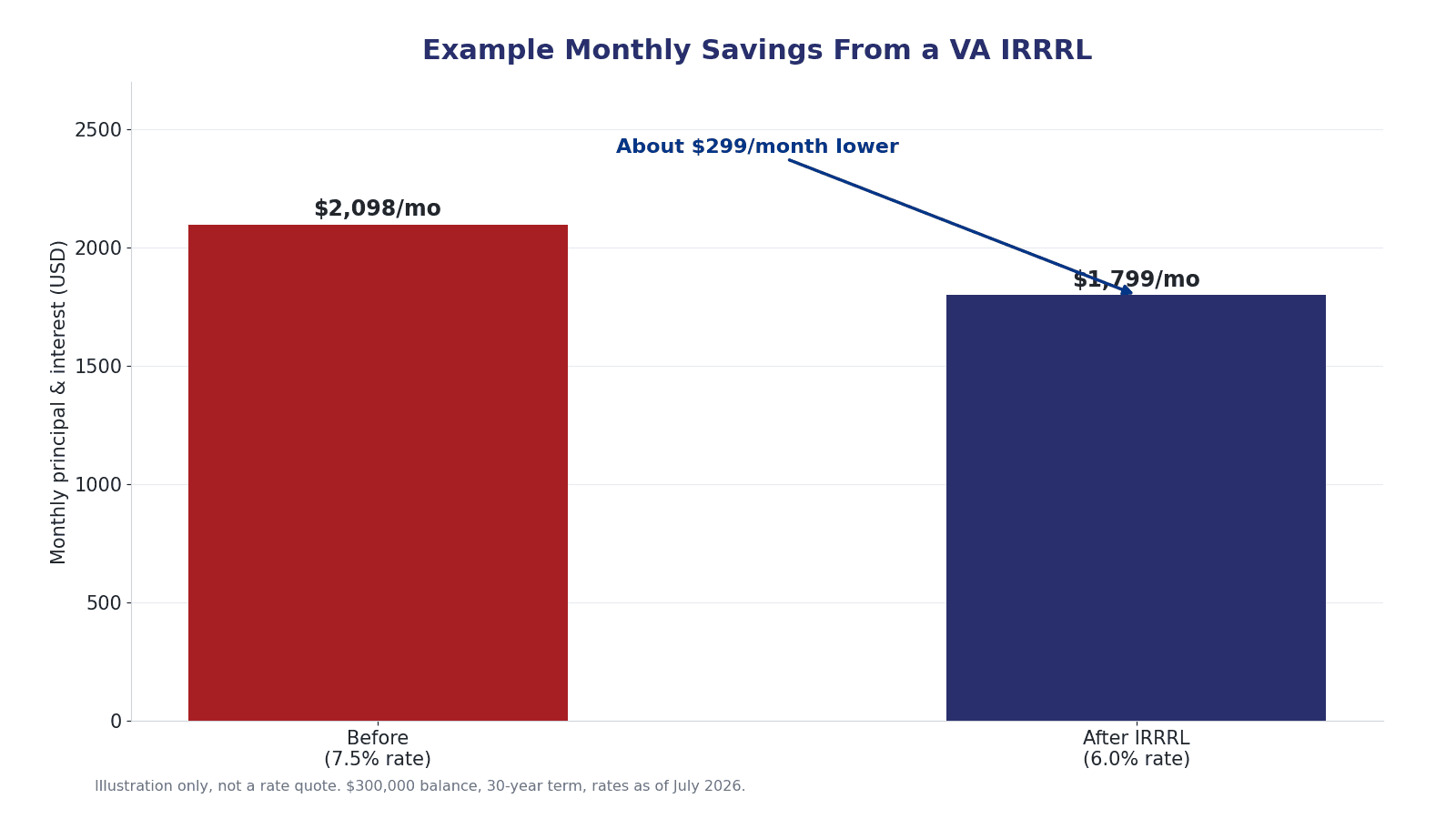
An illustration only, not a rate quote. Actual savings depend on your balance, rate, and term. Rates as of July 2026.
VA IRRRL Requirements
The VA and Congress added rules to make sure a streamline actually helps the veteran, not just the lender. The main ones are seasoning, net tangible benefit, and fee recoupment.
Seasoning: The 210-Day Rule
You cannot refinance the day after you close. Per the VA IRRRL page, your new loan cannot close until the later of two dates: 210 days after you made the first payment on your current loan, and the date you make your sixth monthly payment. In short, you generally need at least six on-time payments and about seven months of history before you can streamline.
Net Tangible Benefit
The refinance must leave you meaningfully better off, a standard the VA calls a net tangible benefit. Usually that means a lower interest rate, or moving from an adjustable rate to a fixed rate for stability. A lender cannot approve an IRRRL that does not clearly help you.
Planning Your Next Move?
Connect with Veteran & Military Spouse Real Estate Agents and VA Loan Experts You Can Trust.
Fee Recoupment
The costs of the refinance must pay for themselves within 36 months through your monthly savings. This recoupment rule protects you from refinancing so often that the fees eat up the benefit.
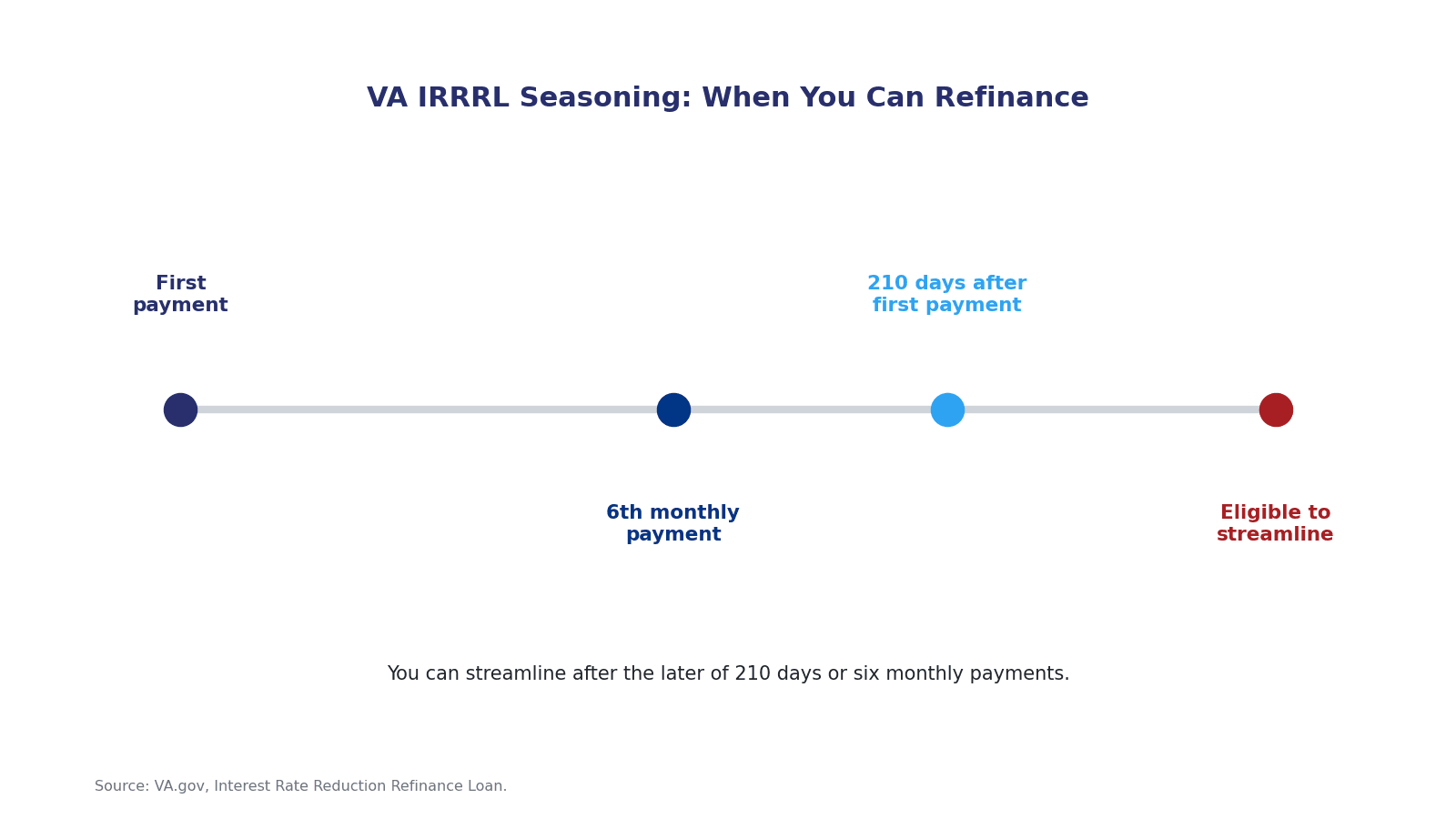
The seasoning clock: you can streamline after the later of 210 days or six payments. Source: VA.gov.
Not sure whether a streamline beats holding your current loan? Connect with a VeteranPCS lender to run your numbers before you commit.
Is a VA IRRRL Worth It?
A streamline is usually worth it when three things are true: rates have dropped enough to lower your payment, you plan to keep the home past the break-even point, and the new loan passes the recoupment test. Watch out for offers that stretch your loan back out to 30 years, which can lower the payment while costing more interest overall. Also be cautious of aggressive mailers; the VA and the Consumer Financial Protection Bureau warn about refinance offers that sound too good to be true.
To compare a streamline against other timing choices, read does the VA loan always have the best rate and our take on falling interest rates for homebuyers.

Free First-Time Homebuyer Guide
Make your move less stressful with our step-by-step first-time homebuyer guide.
We respect your privacy. Unsubscribe anytime.Frequently Asked Questions
Do I need an appraisal for a VA IRRRL? Usually no. The streamline typically waives the appraisal, which is one reason it closes faster than a purchase loan.
Can I get cash out with an IRRRL? No. The IRRRL only lowers your rate. If you want to tap your equity, that is a VA cash-out refinance, which is a different loan with different rules.
How soon can I use an IRRRL after buying? After the later of 210 days from your first payment or your sixth monthly payment. Most homeowners qualify a little past the six-month mark.
Do I pay the funding fee again? Yes, but only 0.5 percent, and you can roll it into the loan. See the full breakdown in our VA funding fee guide.
The Bottom Line
The VA IRRRL is one of the most veteran-friendly tools in the loan program: a low funding fee, light paperwork, and rules that make sure the refinance actually helps you. If you have a VA loan, have made at least six payments, and rates have fallen since you bought, it is worth running the numbers with a lender you trust.
Connect with a VeteranPCS lender to see whether a streamline refinance fits your situation, or find a military-experienced agent for your next move.
Know a fellow veteran sitting on a high rate? Share this guide with your military network so they can check their options too.
This content is for informational purposes. Consult a professional for personal financial decisions.