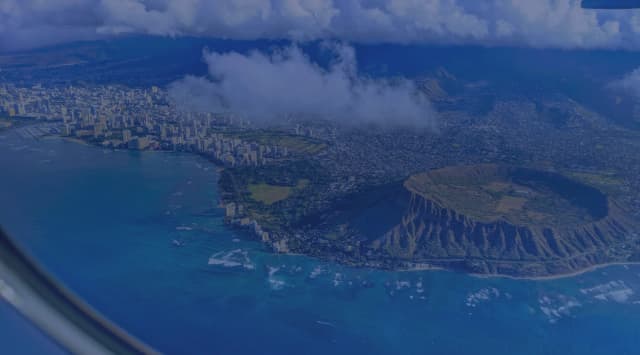

If you have orders to Hawaii, the first thing you want is a map in your head. The army bases in Hawaii sit on two islands, and they do not all do the same job. Some are troop posts. One is a hospital. Two are mostly housing. A few are training land where nobody lives.
This guide walks through each installation, then spends real time on the part that decides your whole move: where your family will live. PCS stands for Permanent Change of Station, the military's term for a move to a new duty station.
Every Army Installation in Hawaii, at a Glance
U.S. Army Garrison Hawaii, or USAG Hawaii, serves close to 100,000 Soldiers, civilians and family members. Its four main installations are Fort Shafter, Schofield Barracks, Tripler Army Medical Center and Wheeler Army Airfield. The garrison headquarters sits at Wheeler, about 20 miles from Honolulu.
Beyond those four, the Army holds several smaller properties on Oahu and two sites on Hawaii Island.
| Installation | Where it is | What it does |
|---|---|---|
| Schofield Barracks | Central Oahu, near Wahiawa | Main troop post; home of the 25th Infantry Division |
| Wheeler Army Airfield | Central Oahu, next to Schofield | Army aviation; USAG Hawaii headquarters |
| Fort Shafter | Honolulu | Headquarters of U.S. Army Pacific |
| Tripler Army Medical Center | Above Moanalua, Honolulu | The Army's medical center for the Pacific |
| Aliamanu Military Reservation | Between Honolulu and Pearl Harbor | Family housing and community services |
| Helemano Military Reservation | North of Schofield Barracks | Family housing and support facilities |
| Fort DeRussy | Waikiki | Recreation and morale site, not a duty post |
| Pililaau Army Recreation Center | Waianae, west Oahu | Beach cottages for service members and families |
| Kahuku Training Area | North Oahu | Maneuver and helicopter training land; no housing |
| Pohakuloa Training Area | Hawaii Island | Large live-fire and maneuver training area |
| Kilauea Military Camp | Hawaii Island | Recreation site near Hawaii Volcanoes National Park |
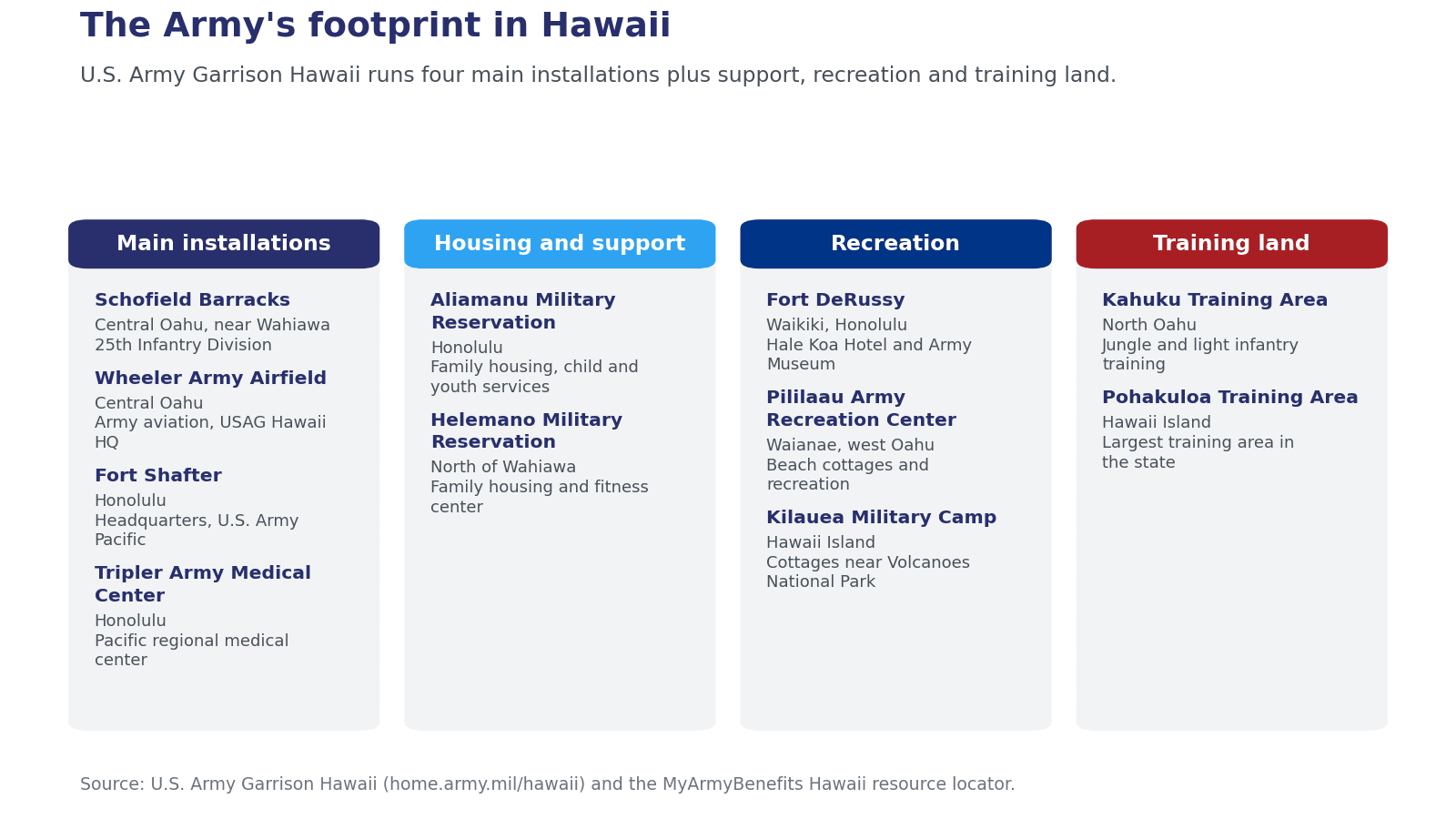
The Army's Oahu footprint, grouped by mission. Source: U.S. Army Garrison Hawaii.
What the Army Bases in Hawaii Do Day to Day
Schofield Barracks
Schofield sits in central Oahu near Wahiawa, ringed by the Waianae and Koolau mountains. It is the Army's main troop installation in the state and the home of the 25th Infantry Division. If your orders name a line unit, this is almost certainly where you are headed. We cover the arrival details in our PCS to Schofield Barracks guide.
Wheeler Army Airfield
Wheeler is a short drive from Schofield and handles Army aviation. It is also where USAG Hawaii is headquartered, which means a lot of garrison business gets done there even if you never fly.
Fort Shafter
Fort Shafter sits in Honolulu and is the headquarters of U.S. Army Pacific. Other major commands in the islands include the 8th Theater Sustainment Command, the 18th Medical Command, the 94th Army Air and Missile Defense Command and the 311th Signal Command. The 9th Mission Support Command, an Army Reserve headquarters, is at Fort Shafter Flats. You can see the full list on the garrison's tenant units page.
Tripler Army Medical Center
Tripler is the coral-pink hospital you can see from the H-1 freeway. It is the Army's medical center for the Pacific region and a duty station in its own right for medical personnel.
The smaller Oahu properties
Aliamanu Military Reservation, usually called AMR, and Helemano Military Reservation, or HMR, are mostly housing rather than mission work. Fort DeRussy in Waikiki and the Pililaau Army Recreation Center in Waianae are recreation sites. None of these show up on orders as a duty station, but several will show up on your housing options.
The training areas
Kahuku Training Area on north Oahu is ground maneuver and helicopter training land. Pohakuloa Training Area, or PTA, sits on Hawaii Island between Mauna Loa, Mauna Kea and Hualalai. PTA covers about 133,000 acres and has its own garrison, and units from every service train there. Neither place is somewhere families live, but if you are in a maneuver unit you will spend nights at both.
For the other branches in the islands, see our overview of what military bases are in Hawaii.
Where Army Families Actually Live
This is the decision that shapes your tour. You have three real options, and each one has a catch.
On post with Island Palm Communities
Army family housing on Oahu is privatized and run by Island Palm Communities, or IPC, under the Residential Communities Initiative. The Army Housing Office is at 344 Heard Avenue, Building 556, Schofield Barracks, reachable at 808-787-7700. Details are on the garrison's housing page.
IPC runs about 7,910 homes across two regions. The north region covers Schofield Barracks, Wheeler and Helemano. The south region covers Fort Shafter, Tripler, AMR and Red Hill. There is normally a waitlist on every category. Waits for enlisted families have run from immediate to about a month, while officer housing can take up to the 60-day limit on Temporary Lodging Allowance. Peak season is June through August, per MilitaryINSTALLATIONS.
On post, you give up your Basic Allowance for Housing, or BAH, and the rent is covered. That trade is simple and predictable, which is why many first-tour families take it.
Renting off post
Off-post rentals give you more choice of neighborhood and school. They also cost more up front. Expect the first month's rent plus a deposit equal to another month, and expect utilities to be billed separately. Homes in Hawaii are generally smaller than what you left on the mainland, so ask the housing office what to ship and what to store before your movers pack you out. If you are bringing animals, read our guide to a PCS to Hawaii with pets early, because the quarantine rules have long lead times.
Planning Your Next Move?
Connect with Veteran & Military Spouse Real Estate Agents and VA Loan Experts You Can Trust.
Buying on Oahu
Buying here is a different animal than buying near a mainland post. In July 2026, the median resale price for a single-family home on Oahu was $1,224,500, up 13.9 percent from a year earlier. The median condo resale was $504,500. Single-family homes spent a median of 14 days on the market, and a third of them still closed under $1 million, according to the Honolulu Board of REALTORS July 2026 market report.
Those are median sale prices, not typical home values, and they move month to month. Read them as a starting point, not a promise.
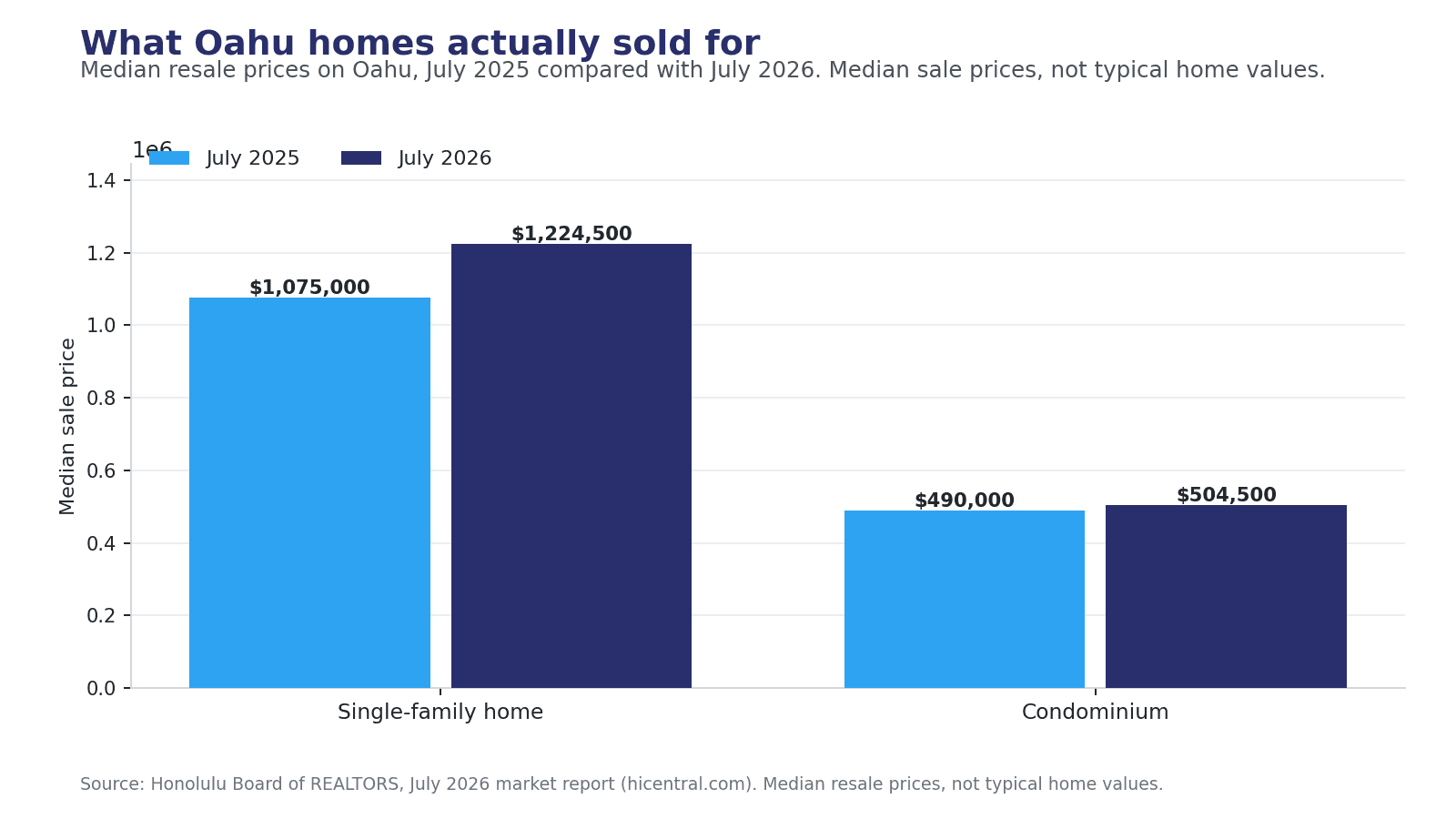
What Oahu homes actually sold for. Source: Honolulu Board of REALTORS, July 2026 market report.
The leasehold trap
Here is the Hawaii-specific thing that catches mainland buyers. Some homes and condos here are sold leasehold, which means you buy the building but only lease the land under it. Fee simple means you own both outright.
Leasehold matters because the lease ends, and because the ground rent can be renegotiated during the term. Hawaii law requires sellers of residential leasehold property to give buyers a plain-language summary covering the length of the lease, the lease rent terms, the renegotiation dates and how a new lease rent gets calculated (HRS 516D-11). Read that summary. A short remaining lease term can also limit your financing, which matters a lot if you are using a VA loan. Our post on using your VA loan in Hawaii walks through how that plays out on Oahu.
If you are still weighing renting against buying, we go deeper in should active-duty military buy a home in Hawaii.
How to Run Your BAH Math
Basic Allowance for Housing is the monthly amount the military pays you toward off-post housing. It is set by rank, dependent status and the ZIP code of your duty station.
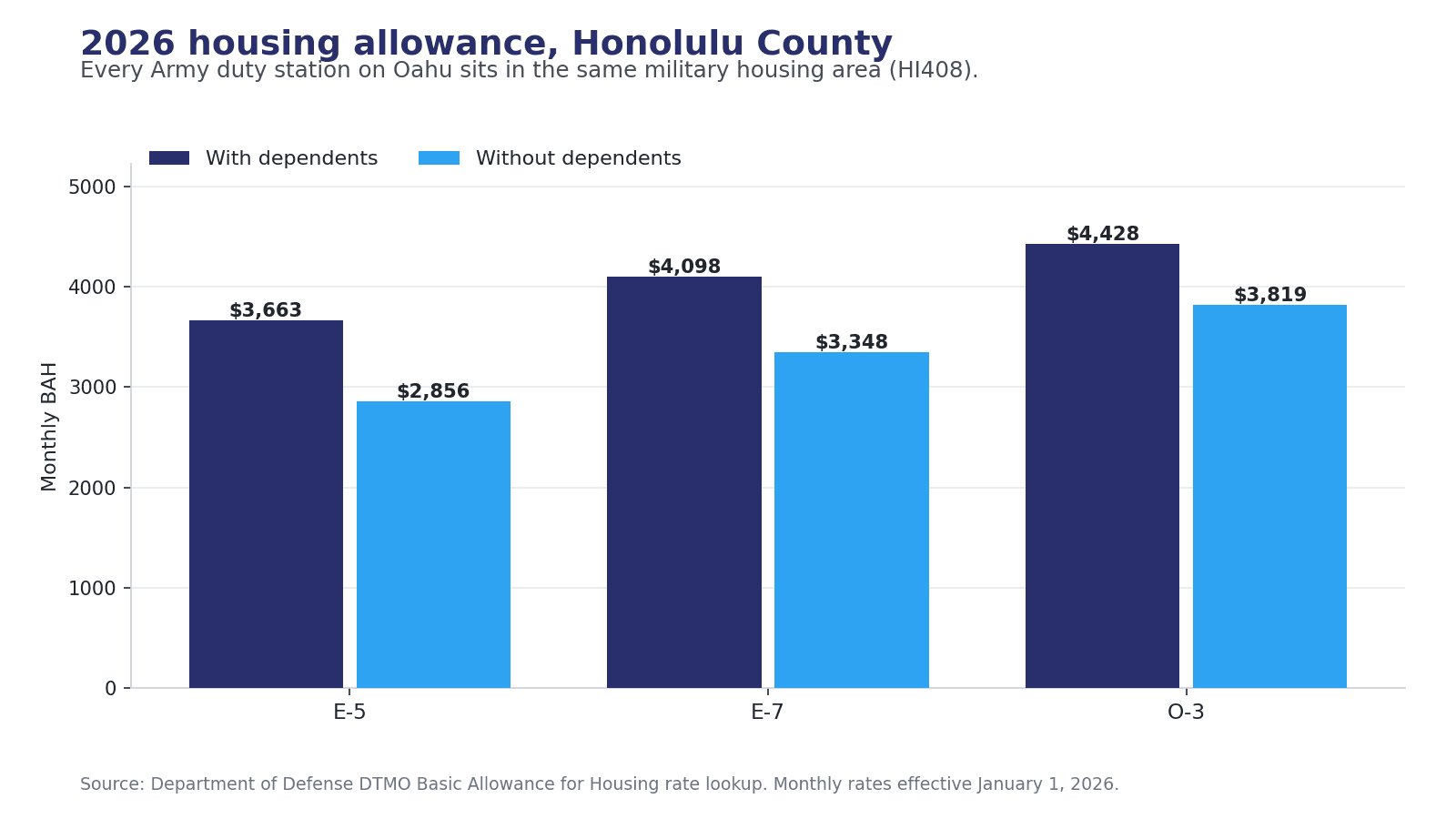
Every Army installation on Oahu falls in the same military housing area, Honolulu County (HI408). Here are the 2026 rates for three common pay grades, pulled from the official DTMO BAH rate lookup.
| Pay grade | With dependents | Without dependents |
|---|---|---|
| E-5 | $3,663 | $2,856 |
| E-7 | $4,098 | $3,348 |
| O-3 | $4,428 | $3,819 |
Rates change every January, and 2026 rates rose an average of 4.2 percent across the country when the Department released them on December 11, 2025. Check your own pay grade in the DTMO lookup before you budget, because these figures will be out of date next year.

Free First-Time Homebuyer Guide
Make your move less stressful with our step-by-step first-time homebuyer guide.
We respect your privacy. Unsubscribe anytime.2026 Basic Allowance for Housing for Honolulu County, HI (HI408). Source: DoD DTMO BAH rate lookup, rates effective January 1, 2026.
Then work backward. Your BAH is the ceiling on a comfortable payment, not the target. On Oahu, property taxes, insurance and higher utility bills all take a bite. Our walkthrough on how much house you can afford on BAH shows the math, and veterans who buy should check the Hawaii veteran property tax exemptions first.
If you want a second set of eyes on the numbers, you can talk with a Hawaii agent who has done this move. There is no cost and no obligation.
Two Rules That Catch New Arrivals
Report to the housing office within seven workdays of your reporting date, even if you have no plan to live on post. Families with dependents are also directed to check in with the Housing Services Office within five days of arrival, before signing a lease or a purchase contract.
Personally owned firearms must be registered with the Honolulu Police Department within five calendar days of arriving in Hawaii, then registered again on post. That timeline is short and it starts when you land, not when your household goods do. The garrison spells it out on its visitor information page.
Frequently Asked Questions
How many Army bases are in Hawaii?
USAG Hawaii names four main installations: Fort Shafter, Schofield Barracks, Tripler Army Medical Center and Wheeler Army Airfield. Add the smaller Oahu properties, the training areas and the two Hawaii Island sites and the count reaches about eleven Army-held locations.
Which Army base in Hawaii is the biggest?
By land, Pohakuloa Training Area on Hawaii Island is the largest at roughly 133,000 acres, but nobody lives there full time. On Oahu, Schofield Barracks is the Army's main troop installation and the one most families are assigned to.
Can I live off post in Hawaii?
Yes. You keep your BAH and rent or buy on the local market. You still have to check in with the housing office first, and you should expect higher move-in costs and smaller homes than most mainland markets.
Is Tripler an Army base?
Yes. Tripler Army Medical Center is one of USAG Hawaii's four main installations. It is a hospital and a duty station, not a training post.
What is BAH in Honolulu for 2026?
All Oahu duty stations sit in the Honolulu County housing area (HI408). For 2026 the with-dependents rate is $3,663 for an E-5, $4,098 for an E-7 and $4,428 for an O-3. Confirm your own pay grade in the DTMO BAH rate lookup linked above, because rates reset every January.

This content is for informational purposes. Consult a professional for personal financial decisions.