A PPM move, short for personally procured move and still widely called a DITY (do-it-yourself) move, lets you move your own household goods and get paid for it. For families willing to do the work, it can turn a stressful PCS (Permanent Change of Station, your next set of military move orders) into a few thousand dollars of extra money. This guide explains how the 2026 PPM incentive works and how to keep more of what you earn.
What a PPM Move Actually Pays
When you choose a PPM move, the government pays you a share of what it would have spent to hire a moving company to handle your shipment. That benchmark is called the Government Constructed Cost, or GCC. As of 2026, the standard PPM incentive is 100% of that cost, and you keep whatever you do not spend moving yourself, according to Move.mil and Military OneSource.
Here is the simple idea. If the government would have paid $6,000 to move your goods, and you do it yourself for $2,500 in trucks, fuel, and supplies, the difference is yours to keep, minus taxes. The more efficiently you move, the more you keep.
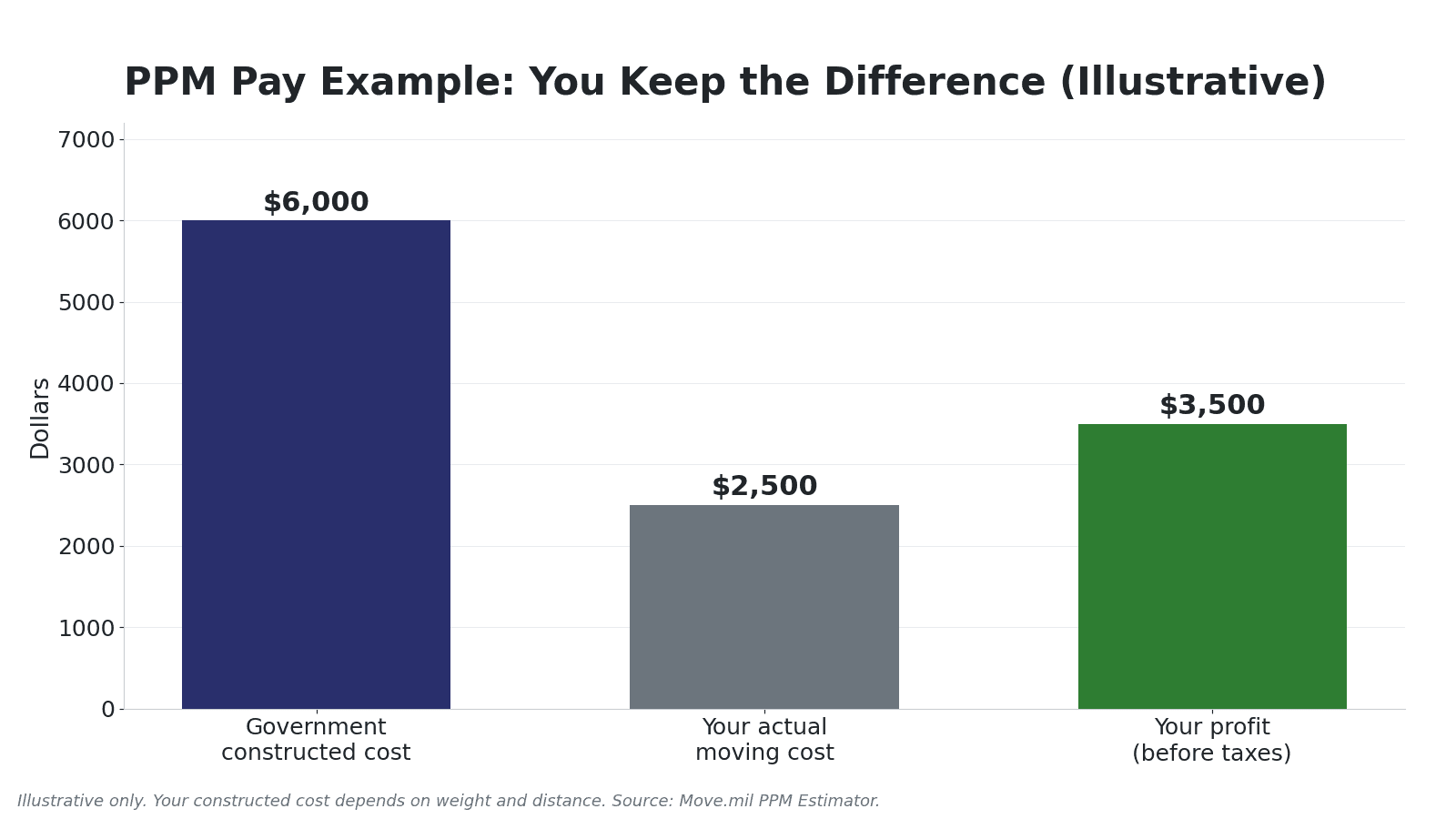 An illustrative example only. Your government constructed cost depends on your weight and distance. Source figures: Move.mil PPM Estimator.
One timely note: from May 15 through September 30, 2025, the Department of Defense ran a temporary increase that paid 130% of the constructed cost, per a 2025 Defense Department advisory. That bonus rate has expired, so plan around the standard 100% for your 2026 move unless your transportation office tells you otherwise.
How the Payment Is Calculated
Your final PPM payment is based on the actual weight you move, proven with certified weight tickets, up to your authorized weight allowance for your pay grade. You weigh your loaded vehicle or truck, then weigh it empty, and the difference is your shipment weight.
Two rules matter most here. First, weight above your authorized allowance does not pay, so there is no benefit to hauling a friend's furniture. Second, the weight tickets are everything. No tickets, no payment. Keep every receipt and every scale slip in one place. Our ultimate PCS binder guide shows a simple system for keeping move paperwork together.
You can also request an advance of up to 60% of your estimated incentive before the move to cover trucks and supplies, according to Military OneSource. If you take the advance, settle your move by your service's deadline so you are not left owing money back.
The PPM Process, Step by Step
A PPM has a clear order of operations. Skipping a step is how families lose money.
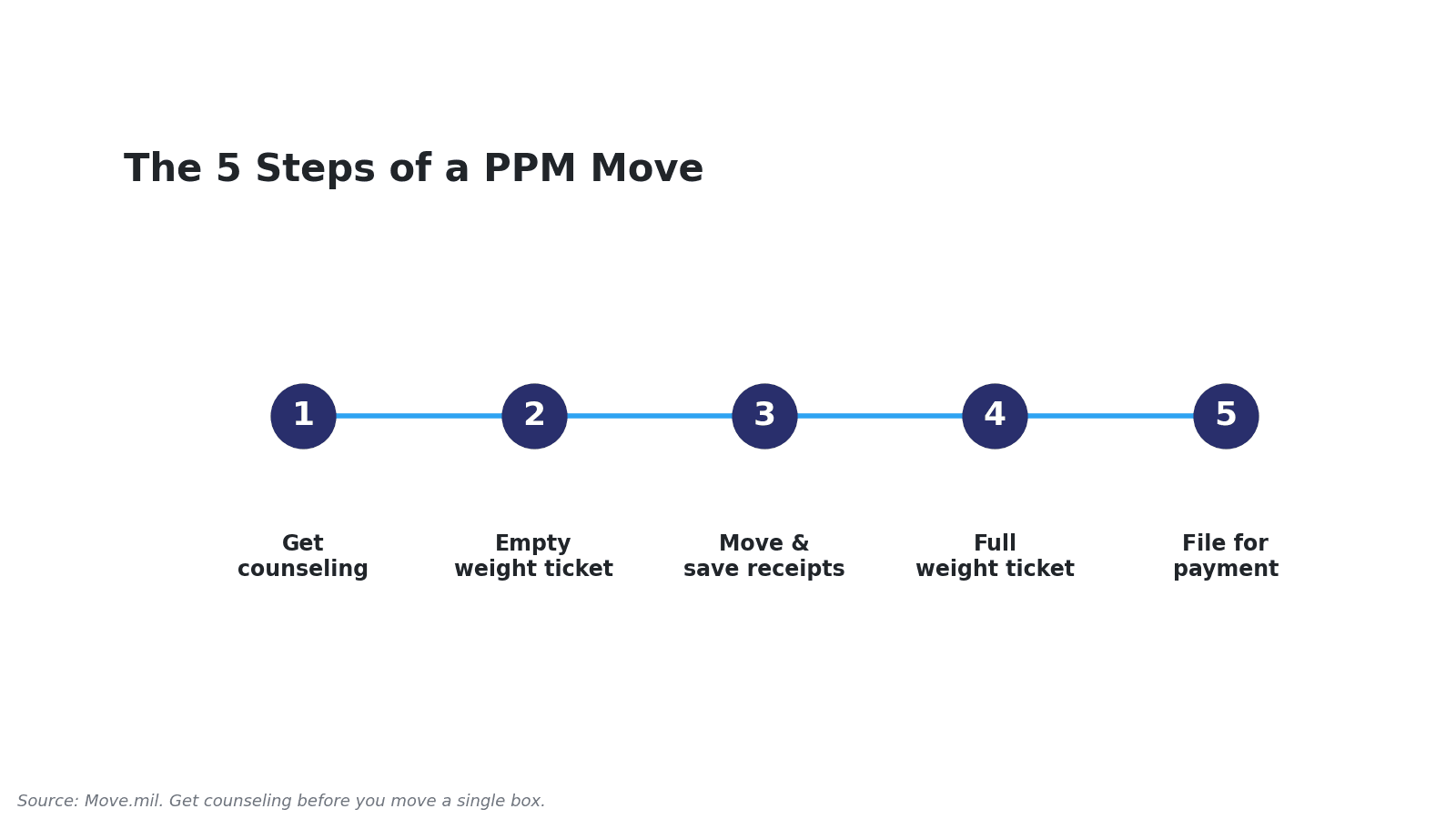 The five-step PPM flow. Get counseling before you move a single box. Source: Move.mil.
- Get counseling at your transportation office and elect a full or partial PPM before you move anything.
- Weigh your truck or vehicle empty and get a certified weight ticket.
- Move your goods and save every receipt for trucks, fuel, boxes, tape, and equipment rental.
- Weigh the loaded vehicle and get a certified full weight ticket.
- File your claim with your weight tickets and receipts, and receive your settlement.
If a full PPM feels like too much, a partial PPM lets the government move most of your goods while you move and get paid for a portion yourself. Our guide on choosing the best relocation method for your PCS compares full PPM, partial PPM, and a standard government move so you can pick the right mix.
Want a local read on your next duty station before you commit to a move plan? Connect with a VeteranPCS agent who has done this move themselves.
How to Maximize Your PPM Payout
The incentive rewards efficiency. A few habits make a real difference.