

Your military PCS weight allowance is one of the most important numbers in your entire move, and most families never look it up until it is too late. A PCS (Permanent Change of Station, your next set of military move orders) comes with a set limit on how many pounds of household goods the government will move for you. Go over that limit, and you pay the difference out of pocket. This guide breaks down the 2026 weight allowance by rank, explains what counts toward it, and shows how to stay under.
What Is a PCS Weight Allowance?
Your weight allowance is the maximum weight of household goods, called HHG, that the military will ship or store at government expense during a PCS. Household goods means your furniture, clothing, dishes, and the everyday belongings that fill a home. The rank on your orders and whether you have command-sponsored dependents set your limit.
The idea is simple. The government pays to move a reasonable amount of stuff for your family size and rank. Anything above your authorized weight is billed back to you after delivery, so knowing your number before the packers arrive protects your wallet.
2026 PCS Weight Allowance by Rank
The table below shows the standard 2026 household goods weight allowances in pounds, based on your pay grade and dependency status. These figures come from the Joint Travel Regulations, the official authority for military travel and transportation entitlements, and are summarized by Military OneSource.
| Pay grade | Without dependents | With dependents |
|---|---|---|
| E-1 to E-3 | 5,000 | 8,000 |
| E-4 | 7,000 | 8,000 |
| E-5 | 7,000 | 9,000 |
| E-6 | 8,000 | 11,000 |
| E-7 | 11,000 | 13,000 |
| E-8 | 12,000 | 14,000 |
| E-9 | 13,000 | 15,000 |
| W-1 / O-1 | 10,000 | 12,000 |
| W-2 / O-2 | 12,500 | 13,500 |
| W-3 / O-3 | 13,000 | 14,500 |
| W-4 / O-4 | 14,000 | 17,000 |
| W-5 / O-5 | 16,000 | 17,500 |
| O-6 and above | 18,000 | 18,000 |
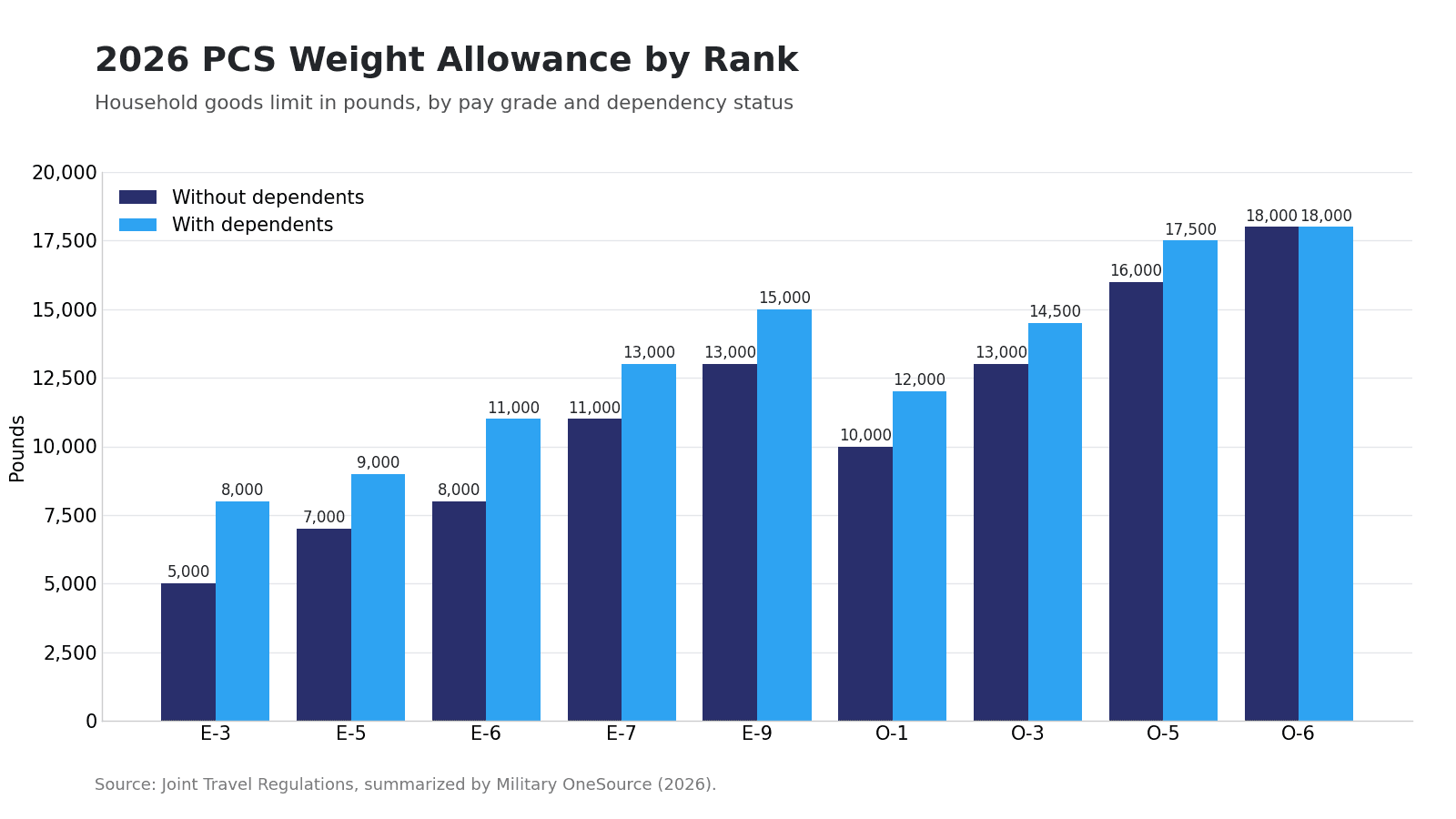 2026 household goods weight allowances for selected pay grades. Source: Joint Travel Regulations, summarized by Military OneSource.
A quick note on reading the chart. An E-5 with a spouse and two kids gets 9,000 pounds, while a childless E-5 gets 7,000. Rank raises the number, and so does having dependents. The maximum any service member can ship is 18,000 pounds, no matter how senior. Each branch can add its own guidance, so confirm your exact figure with your local transportation office.
What Counts Toward Your Weight (and What Does Not)
Almost everything the movers pack counts against your allowance, including furniture, appliances you own, and boxes. A few items are treated differently, and knowing them can save you hundreds of pounds.
Professional gear, often called pro-gear, does not count against your household goods limit. Service members can move up to 2,000 pounds of professional books, papers, and equipment, and spouses can move up to 500 pounds of their own professional gear, according to Military OneSource. Pro-gear must be listed and weighed separately, so tell your movers before they pack.
If you are heading to a remote or overseas duty station, you may also ship consumable goods, such as household supplies that are hard to buy locally, up to 1,250 pounds per tour year at authorized locations, per Move.mil. Your car has its own separate shipping rules and does not come out of your HHG weight, but motorcycles, spare vehicle parts, and utility trailers usually do.
Planning Your Next Move?
Connect with Veteran & Military Spouse Real Estate Agents and VA Loan Experts You Can Trust.
What Happens If You Go Over
If your shipment weighs more than your allowance, the government still moves everything, then sends you a bill for the overage. The charge is based on the excess weight and the distance of your move, so a long-distance PCS makes every extra pound more expensive. Families are often surprised because the bill can arrive weeks after delivery.
The good news is that you can control your weight. The government uses your empty and full truck weights to figure your shipment, so lightening the load before the scale reads is money in your pocket, especially if you are doing a personally procured move, where staying light directly increases your payout.
How to Stay Under Your Weight Allowance
A little planning keeps you inside your limit and avoids a surprise bill.
Estimate before you pack. The Department of Defense weight estimator at USTRANSCOM gives you the average weight of common items so you can compare against your allowance.
Purge the heavy, low-value things first. Old exercise equipment, particleboard furniture, and boxes of paper add up fast. Our guide to what military movers will not pack is a good prompt for what to sort through.
Weigh your pro-gear separately. If professional gear gets lumped into your household goods, it eats into your allowance for no reason.
Know your other entitlements. Your weight allowance is only one piece of your move. Pair it with your dislocation allowance and your PCS travel pay for mileage and per diem so you claim everything you are owed. Our overview of PCS entitlements and benefits and the ultimate PCS checklist and timeline keep the whole move organized.

Free First-Time Homebuyer Guide
Make your move less stressful with our step-by-step first-time homebuyer guide.
We respect your privacy. Unsubscribe anytime.Thinking about where you will land at your next base? A VeteranPCS agent who has done this move can help you plan housing before you weigh a single box.
Frequently Asked Questions
How do I find my exact PCS weight allowance?
Check your pay grade and dependency status against the Joint Travel Regulations table, then confirm with your local transportation office. They set your official number based on your orders.
Does my spouse's stuff count toward my weight allowance?
Yes. Your household goods allowance covers the whole family's belongings. Your spouse can separately move up to 500 pounds of their own professional gear, which does not count against the household limit.
Is my car part of my weight allowance?
No. Shipping or storing one privately owned vehicle is a separate entitlement and does not come out of your household goods weight. Motorcycles and spare parts shipped as household goods do count.
What if I go over my weight allowance?
The government moves everything, then bills you for the excess weight. The cost depends on how many pounds you are over and the distance of your move.
The Bottom Line
Your military PCS weight allowance is a hard number set by your rank and family size, and staying under it is one of the easiest ways to keep money in your pocket during a move. Look up your limit early, weigh your pro-gear separately, and purge the heavy items you no longer need. When you are ready to line up housing at your next duty station, connect with a VeteranPCS agent who understands military moves. Share this guide with someone in your unit who is about to PCS.
This content is for informational purposes. Consult a professional for personal financial decisions.