
Not every set of orders lines up with summer. If your report date lands in the cold months, you are looking at a winter PCS move, and that is not a bad thing. A PCS (Permanent Change of Station) move in the off-season can actually go smoother than a summer one, as long as you plan for the weather. This guide covers what changes when you move in winter and how to make it work for your family.
The biggest surprise for most families is that winter can be the calmer time to move. Let's start there.
Why Off-Season Moves Have Real Upsides
Summer is the crunch. About 300,000 service members and families move each year, and roughly 120,000 of those moves happen during the mid-May to September peak, according to the U.S. Army. That rush competes with civilian summer moves, which stretches moving crews thin and fills up rental trucks and hotels.
Winter flips that. When you move in the off-season, moving companies have more open dates, more flexibility, and often more time to handle your belongings with care. You may find it easier to lock in the pack-out and delivery days you want, and temporary lodging near your new base is usually easier to book. Fewer families competing for the same crews can mean a less rushed experience overall.
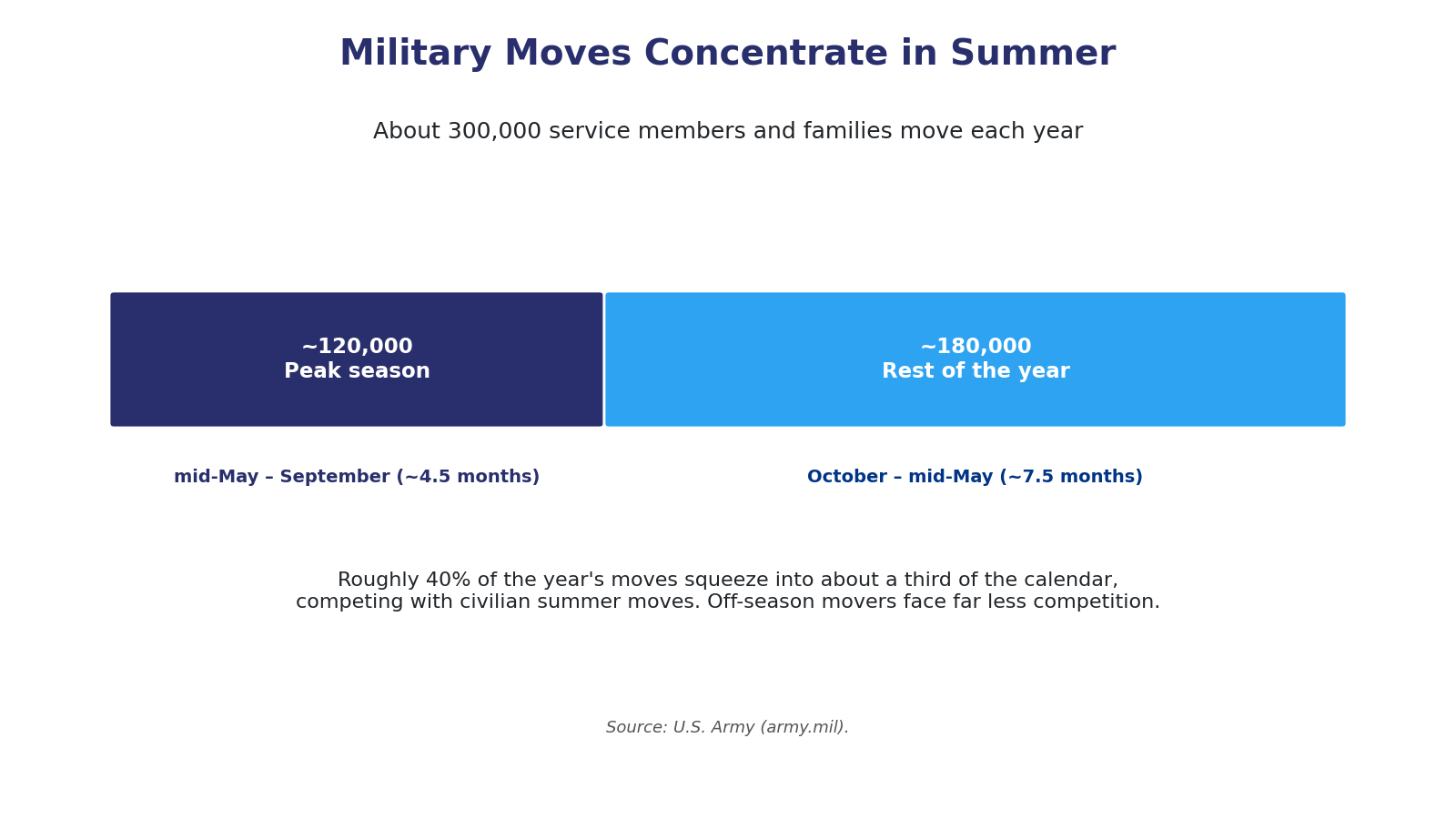
Most military moves cluster in summer, so winter movers face less competition for crews, trucks, and lodging. Source: U.S. Army.
Prepare Your Belongings for the Cold
Cold and moisture are hard on household goods, so pack with the weather in mind.
- Keep a clearly labeled cold-weather essentials box with coats, gloves, hats, and blankets that travels with you, not on the truck.
- Protect electronics, instruments, and anything with liquid or batteries. Extreme cold can crack screens and drain power, so carry the sensitive items with you when you can.
- Wipe down anything that might collect condensation when it moves from a cold truck into a warm home, and let boxes adjust to room temperature before you unpack electronics.
- Make sure walkways at both homes are clear of ice and snow on moving day. Movers can refuse to work an unsafe path, and a fall can end your move day fast.
Remember that some items are on the do-not-pack list no matter the season. Our guide to what military movers will not pack covers the flammables and hazards to set aside before pack-out.
Winterize Your Travel
If you are driving to your next duty station, treat the road trip as its own project. Winter weather and short daylight hours change how you plan the drive.
- Service your vehicle first. Check the battery, tires, antifreeze, wiper blades, and heater before you leave.
- Build a car emergency kit with a blanket, flashlight, water, snacks, a phone charger, and a small bag of sand or kitty litter for traction.
- Watch the forecast along your whole route, not just your start and end points. A clear morning can turn into an icy pass by afternoon.
- Plan shorter driving days. With less daylight and possible weather delays, give yourself margin so you are never forced to push through a storm.
The federal government's winter driving safety tips from Ready.gov are a quick, useful refresher before a long cold-weather drive.
Mind the Holiday Calendar
Winter moves often bump into the holidays, and that affects scheduling. Transportation offices, housing offices, and many businesses run on reduced hours or close entirely around late December. Moving crews book up fast in the days right before and after a holiday because their own staff want time off, too.