
Permanent Change of Station (PCS) orders force a decision that civilian homeowners rarely face on a deadline: do you rent or sell your home when you PCS? Both paths can be right. Selling converts your equity into a down payment at the next duty station. Renting keeps the asset — and possibly a low mortgage rate — working while someone else pays it down.
The wrong way to decide is by gut feel in the middle of moving chaos. The right way is to run four checks: cash flow, taxes, your VA entitlement, and your honest appetite for being a landlord from three time zones away.
Check 1: The Monthly Cash Flow Math
Start with one question: would realistic rent cover the true monthly cost of keeping the home? True cost means mortgage principal and interest, taxes, insurance, any homeowners association dues, property management, and a repair reserve.
Two numbers frame the 2026 market:
- The typical U.S. home value is about $370,320, up 0.7 percent over the past year, per the Zillow Home Value Index (a typical value, not a median sale price).
- The average 30-year fixed mortgage rate was 6.43 percent for the week of July 2, 2026, per Freddie Mac's Primary Mortgage Market Survey.
That second number cuts both ways. If you bought or refinanced when rates were near 3 percent, your payment may sit far below what a tenant would pay in rent — a strong argument for keeping the home. If you bought recently at 6 percent or higher, rent often falls short of the full carrying cost, and you would be paying monthly for the privilege of owning from afar.
Budget honestly for the quiet costs: professional property management commonly runs a meaningful slice of monthly rent, and every vacancy month is a mortgage payment with no rent behind it.
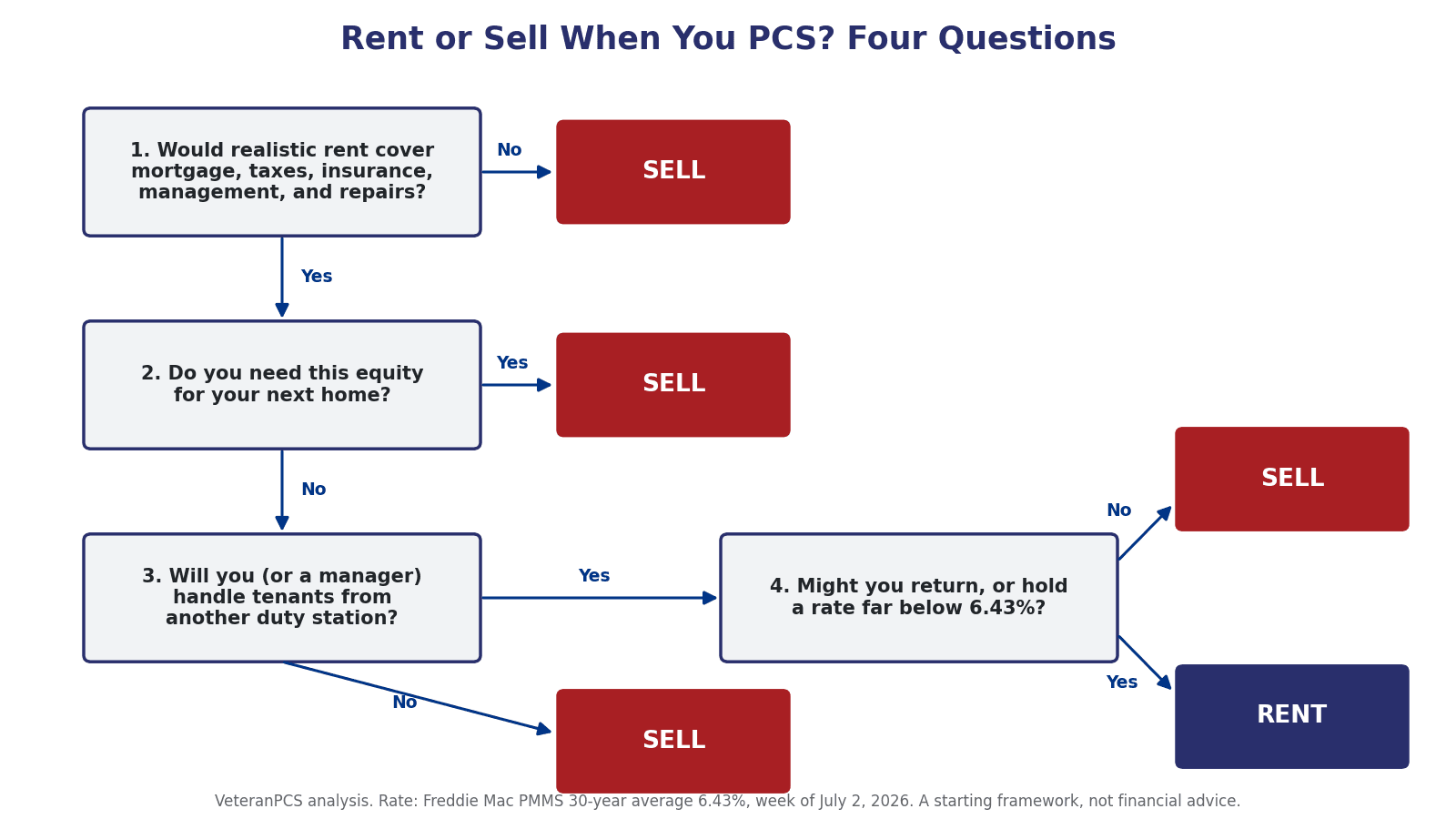 Four questions that settle most rent-or-sell decisions. Source: VeteranPCS analysis of IRS, Freddie Mac, and Zillow data linked in this post.
Check 2: The Military Tax Advantage Most Owners Miss
Homeowners can generally exclude up to $250,000 of gain ($500,000 married filing jointly) when selling a primary residence, if they lived in it for two of the last five years. Military sellers get a powerful extension: under IRS Publication 523, service members on qualified official extended duty can suspend that five-year test for up to 10 years.
In plain terms: you can often rent your home out for years during PCS assignments and still sell later with the full exclusion. Our guide to the military capital gains exclusion walks through the timelines with examples.
One caution: rental income is taxable, landlording changes your return, and depreciation you claim as a landlord is recaptured when you sell. Military OneSource explains how rental property affects military taxes, and its free MilTax service can handle the forms.
Check 3: Your VA Entitlement at the Next Duty Station
If a VA loan sits on the home you keep, part of your entitlement stays tied up in it. You may still buy at the next base with your remaining entitlement — many families do — but your zero-down buying power could be reduced. Before deciding, read how using your VA loan more than once works.
Selling changes the picture in your favor twice: it frees your equity for the next purchase, and if the buyer is also VA-eligible, your low-rate loan can even be a selling point through a VA loan assumption.