
When you sell a home for more than you paid, the profit is called a capital gain, and it can be taxed. The military capital gains exclusion is a rule that lets active-duty families avoid tax on far more of that gain than civilians can. If a PCS (Permanent Change of Station, your next set of military move orders) ever forced you to leave a home you owned, this could save you thousands. Here is how it works in plain terms.
The Basic Home-Sale Exclusion
Most homeowners already get a generous tax break when they sell their main home. Under Section 121 of the tax code, you can exclude up to $250,000 of gain if you file taxes as a single person, or up to $500,000 if you are married and file jointly, according to IRS Publication 523. Exclude means that gain is not taxed at all.
To qualify, you normally must have owned the home and lived in it as your main home for at least two of the five years before you sell. That two-of-five-years rule is where military life creates a problem, and where the military rule comes to the rescue.
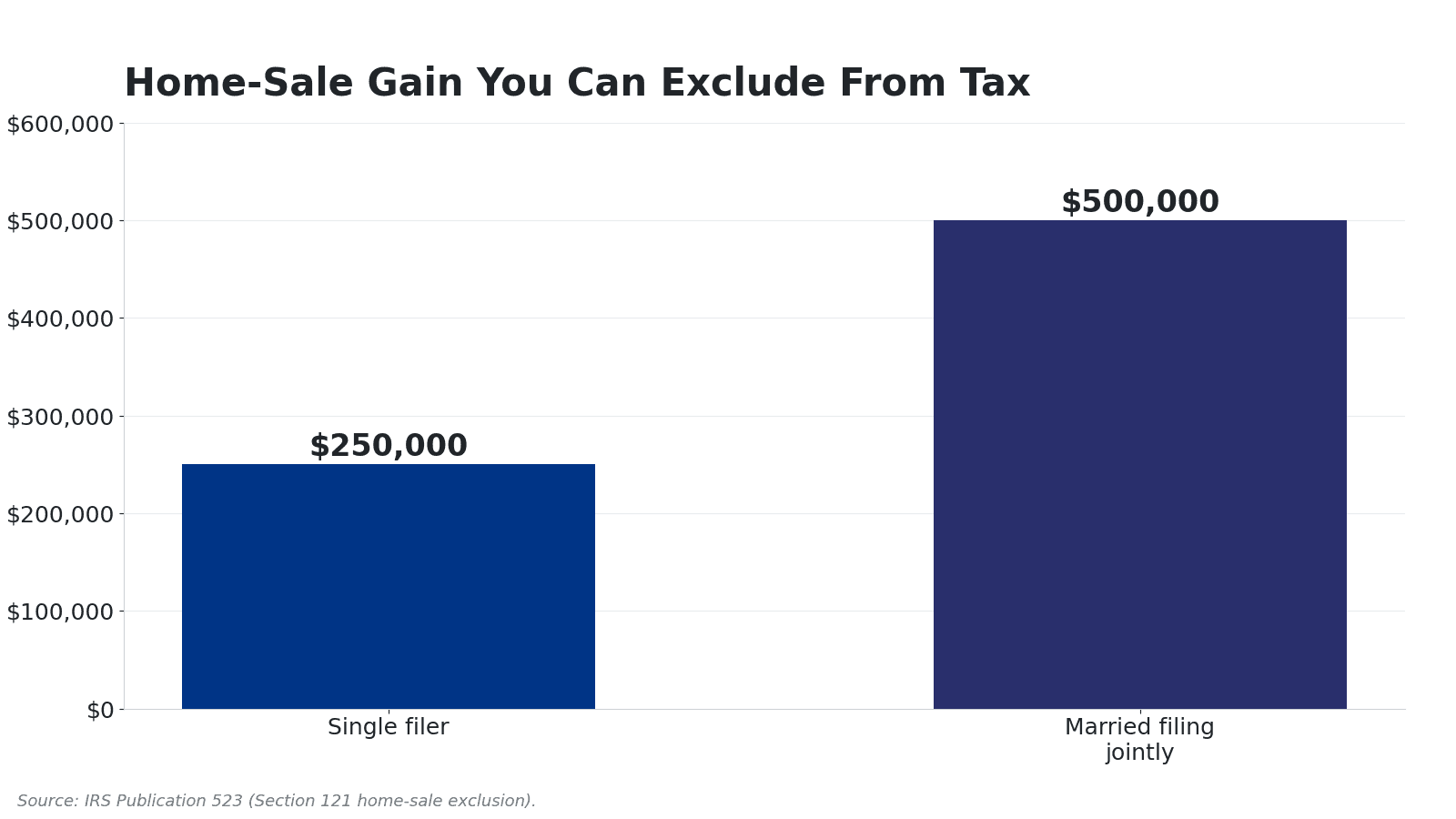 The home-sale exclusion shields up to these amounts of gain from tax. Source: IRS Publication 523.
Why the Standard Rule Hurts Military Families
Imagine you buy a home, live in it for a year, then receive orders to a new base across the country. You rent the home out for several years while stationed elsewhere. By the time you sell, you may not have lived there for two of the last five years, so a civilian in your shoes could lose the exclusion entirely and owe tax on the gain.
That is unfair to families who left only because the military sent them. Congress agreed, which is why there is a special suspension for service members.
The Military Suspension: Up to 10 Extra Years
Here is the key benefit. If you are on qualified official extended duty, you can suspend, or pause, the five-year test period for up to 10 years, according to IRS Publication 523 and the IRS Armed Forces' Tax Guide. In practice, that stretches your window from 5 years to as many as 15 years. So you can still claim the exclusion as long as you lived in the home for two of the last 15 years before the sale.
You count as being on qualified official extended duty when you are ordered to active duty either indefinitely or for more than 90 days, and you are either stationed at least 50 miles from that home or living in government quarters under orders, per the IRS.
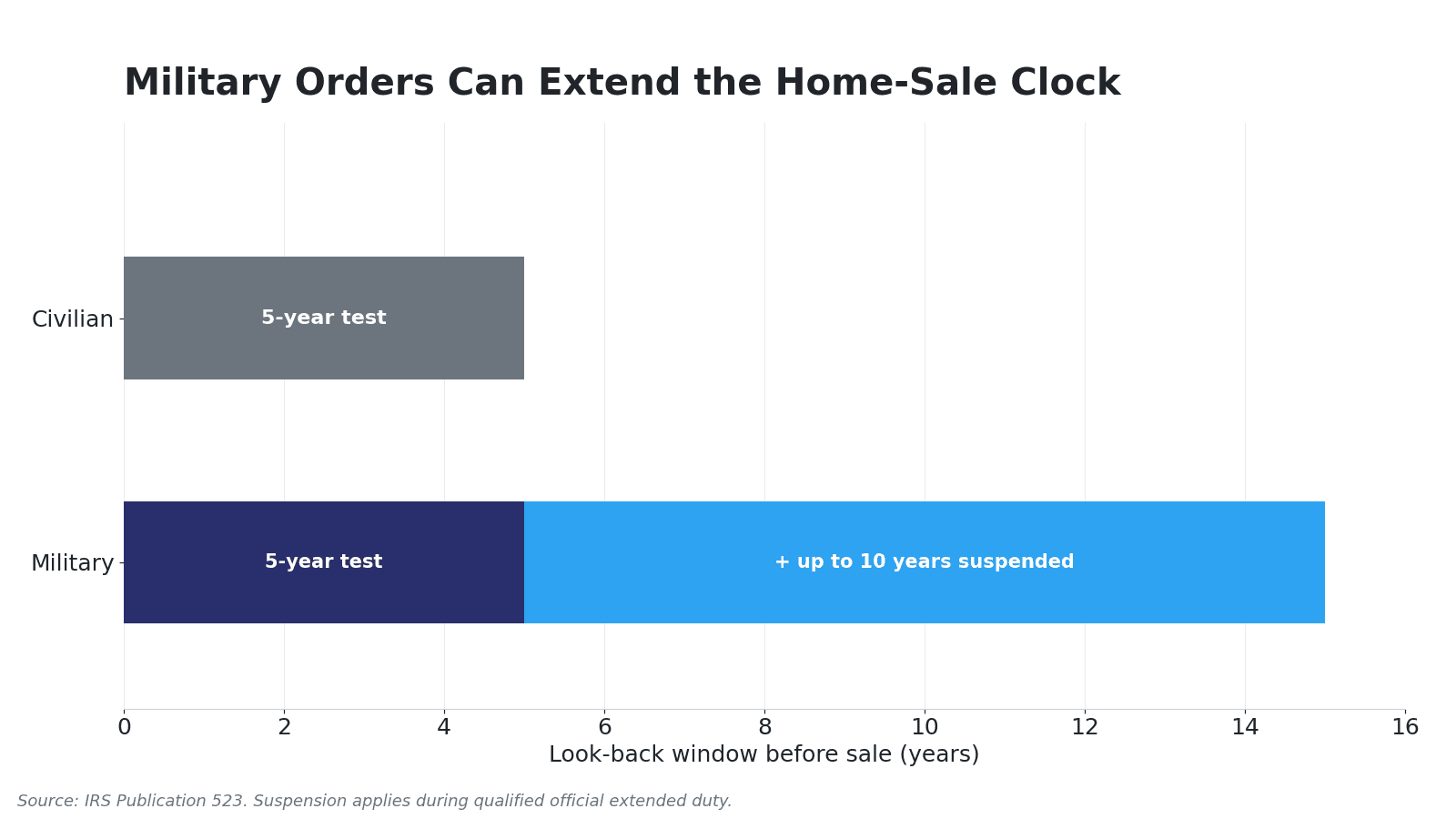 Active-duty orders can stretch the five-year test to as long as 15 years. Source: IRS Publication 523.
A Simple Example
Say a married couple buys a home, lives in it for two full years, then PCSes and rents the home out for the next eight years before selling. A civilian landlord would likely owe tax on the gain, because they did not live there for two of the last five years.
The military couple can suspend the clock during those eight years of extended duty. Because they lived in the home for two years inside the longer 15-year window, they can still exclude up to $500,000 of gain. That is the difference between a large tax bill and none at all.
One caution: renting the home may have created depreciation, and the part of your gain tied to depreciation generally cannot be excluded and may be taxed. A tax professional can sort that out. Military OneSource explains the basics of taxes and military rental properties.
Thinking through whether to sell or hold a home at your next PCS? Connect with a VeteranPCS agent who understands military timing.