A VA (Department of Veterans Affairs) cash-out refinance lets you replace your current mortgage with a new one and take part of your home equity as cash. Veterans use it to pay off high-interest debt, cover a home repair, or switch a non-VA loan into a VA-backed one. It is a powerful tool, but it comes with rules meant to keep you from refinancing into a worse deal. This guide explains how a VA cash-out refinance works and how to tell if it fits your goals.
What Is a VA Cash-Out Refinance?
A cash-out refinance pays off your existing home loan with a new, larger loan and gives you the difference in cash. Say your home is worth $350,000 and you owe $200,000. A cash-out refinance could pay off the $200,000 and hand you a portion of the remaining equity, minus closing costs and the funding fee.
According to VA.gov, you can use this loan two ways: to take cash out of your equity, or to refinance a non-VA loan (like an FHA or conventional mortgage) into a VA-backed loan. You must live in the home you are refinancing.
Unlike the streamline refinance, a cash-out refinance requires a full application, a new appraisal, and income and credit checks, because you are taking on a larger loan.
How Much Can You Borrow?
On a no-down-payment VA loan, you can generally borrow up to the Fannie Mae and Freddie Mac conforming loan limit in most areas, with more available in high-cost counties. The VA itself allows borrowing up to 100 percent of your home's appraised value, but many lenders set their own cap, often around 90 percent, to limit risk.
The exact cash you can pull depends on your appraisal, your remaining entitlement, and your lender's rules. To understand how entitlement affects your loan, read our guide to how VA loan entitlement works.
Type I vs. Type II Cash-Out Refinances
The VA sorts cash-out refinances into two categories, based on how the new loan compares to what you owed.
| Type | What it means |
|---|---|
| Type I | The new loan is equal to or less than the payoff of the loan being refinanced |
| Type II | The new loan is larger than the payoff of the loan being refinanced |
This structure comes from federal rules published in the Federal Register. Most borrowers taking real cash out fall under Type II. The label matters because it affects the fee and cost tests your lender must run.
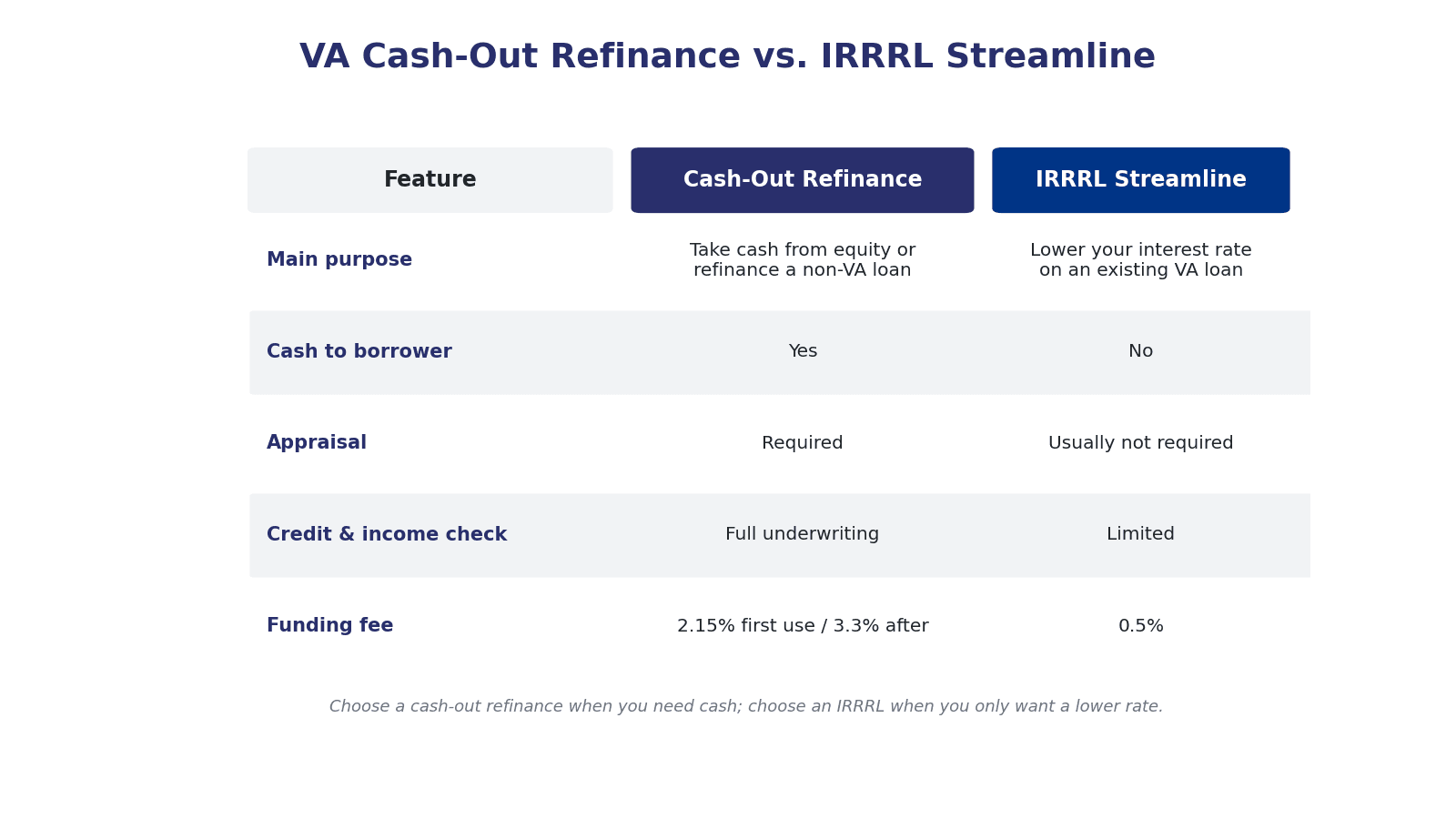
How the VA cash-out refinance compares to the IRRRL streamline. Choose based on whether you need cash or just a lower rate.
The Funding Fee on a Cash-Out Refinance
A cash-out refinance carries the VA funding fee, which you can roll into the loan. Per VA.gov, the cash-out refinance fee is 2.15 percent of the loan for first-time users and 3.3 percent for later uses, and it does not change with your down payment. Buyers who receive VA compensation for a service-connected disability are exempt. See our complete guide to the VA funding fee for the exemption list.