Here is the answer most veterans are surprised to hear: the Department of Veterans Affairs (VA) does not set a minimum credit score for a VA loan. VA loan credit score requirements come from lenders, not from the VA itself. The VA's home loan eligibility toolkit states that while the VA has no minimum credit score requirement, lenders will use your credit history to judge how you handle debt.
That one fact changes how you should shop. If one lender turns you down, another lender working under the same VA rules may say yes. This guide walks through the score floors lenders actually use in 2026, why they differ, and how to strengthen your file before you apply.
How VA Loan Credit Score Requirements Actually Work
The VA guarantees a portion of every VA loan, which protects the lender if the loan ever defaults. Because of that guarantee, lenders can approve borrowers that a conventional loan program might reject. But each lender still sets its own internal floor, called an overlay.
In practice, most VA lenders in 2026 look for a score of about 620, while some accept 580 and a smaller group will go lower with strong compensating factors, according to Rocket Mortgage's VA credit score guide. Veterans United reports similar ranges across the industry.
Body visual below compares typical program floors.
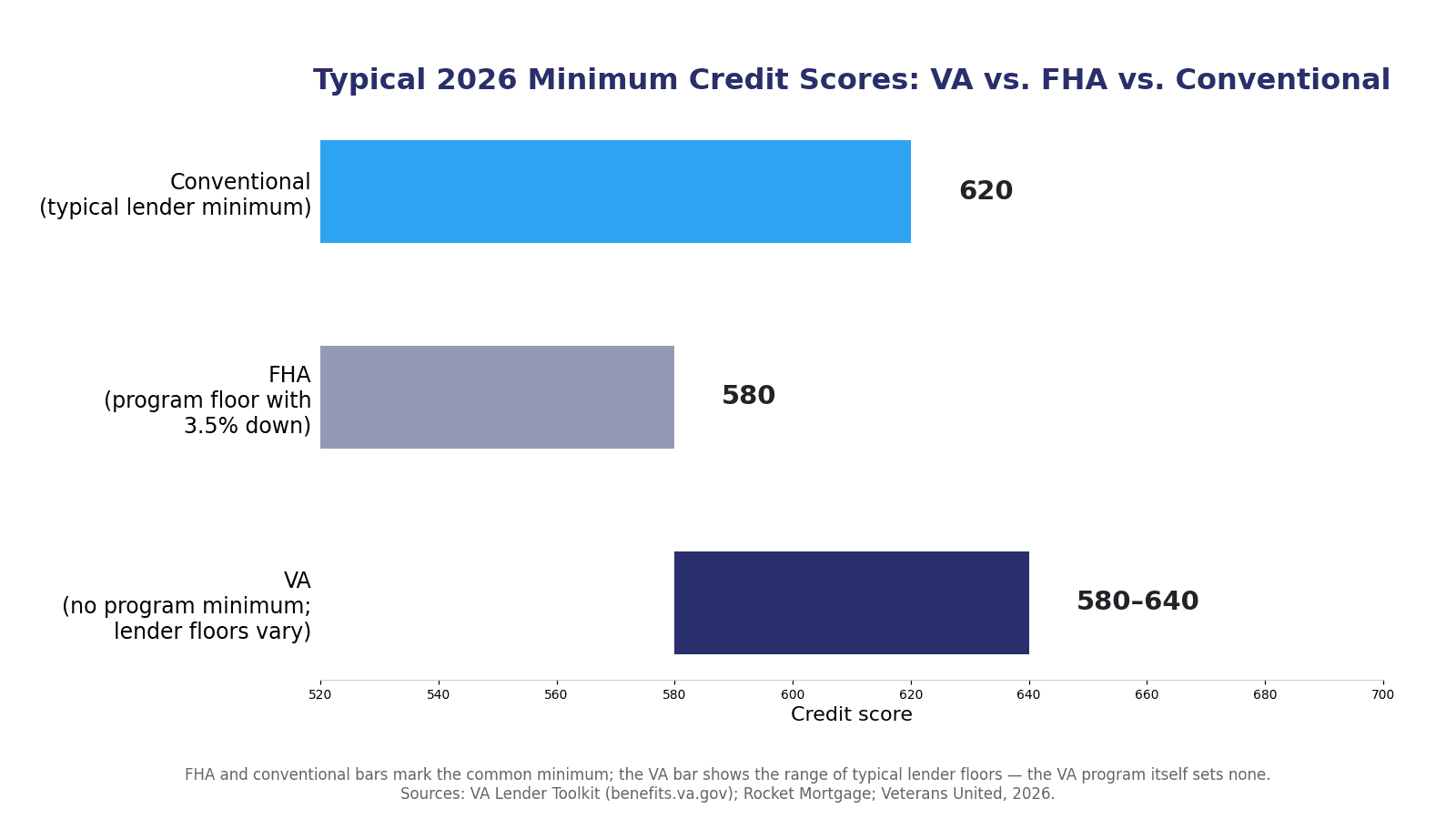 Typical lender score floors in 2026. The VA program itself sets no minimum; each lender chooses its own.
What Lenders Review Besides Your Score
Your credit score is one input, not the whole picture. VA underwriting also weighs:
- Payment history over the last 12 months. Recent late payments matter more than old ones.
- Debt-to-income ratio (DTI). This compares your monthly debt payments to your gross income. VA guidelines flag DTI above 41 percent for closer review, though loans above that level are approved with strong residual income.
- Residual income. This is a VA-specific test: the money left over each month after major expenses. It is one reason VA loans perform well even for borrowers with modest scores.
- Bankruptcy and foreclosure seasoning. A Chapter 7 bankruptcy generally needs two years of distance; a foreclosure typically needs two years as well, which is shorter than many conventional timelines.
If you are still building your file, our guide to building and maintaining strong credit in the military covers the habits that move your score the most.
What If Your Score Is Below 620?
You have three realistic paths:
- Shop more lenders. Overlays differ. A 590 score that fails at one lender can pass at another. A VeteranPCS lender can tell you quickly where your file stands — connect with a VA loan expert here.
- Spend 60 to 90 days repairing the file. Paying a maxed-out credit card below 30 percent of its limit often helps a score in one or two reporting cycles. The Consumer Financial Protection Bureau explains what makes up a credit score and how each piece is weighted.
- Address errors. Dispute wrong late payments or accounts that are not yours before you apply, not after.