A VA energy efficient mortgage is one of the least-used benefits attached to the VA home loan, and it solves a problem almost every military buyer runs into. You find a house that works, but the windows are single pane, the attic has almost no insulation, and you know the utility bill is going to hurt. The VA energy efficient mortgage, usually shortened to EEM, lets you roll the cost of approved energy upgrades directly into your VA loan instead of finding separate financing after closing.
The VA itself calls it "a valuable and often overlooked benefit" in a July 2026 article from the VA Loan Guaranty Service. Here is how it works and how to ask for it.
What an EEM Actually Does
An EEM is not a separate loan. It is an increase to the VA-guaranteed purchase or refinance loan you are already getting, used to pay for energy-saving improvements to the home.
The improvements have to be permanent fixtures that reduce energy consumption. Your monthly mortgage payment goes up a little because the loan is larger, but the VA's position is that the added cost is normally offset by lower utility bills over time.
The maximum is firm. VA does not permit EEMs of more than $6,000, a cap set in 38 U.S.C. section 3710(d).
The Two Cost Tiers
The VA splits EEMs into two tiers, and the paperwork burden is very different between them. This is the single most useful thing to understand before you talk to a lender.
| Improvement cost | What the VA requires |
|---|---|
| Up to $3,000 | Based solely on the documented cost of the improvement |
| $3,000 to $6,000 | Lender must document the cost, such as a bid or contract itemizing the improvements, and certify that projected monthly energy savings exceed the increased cost |
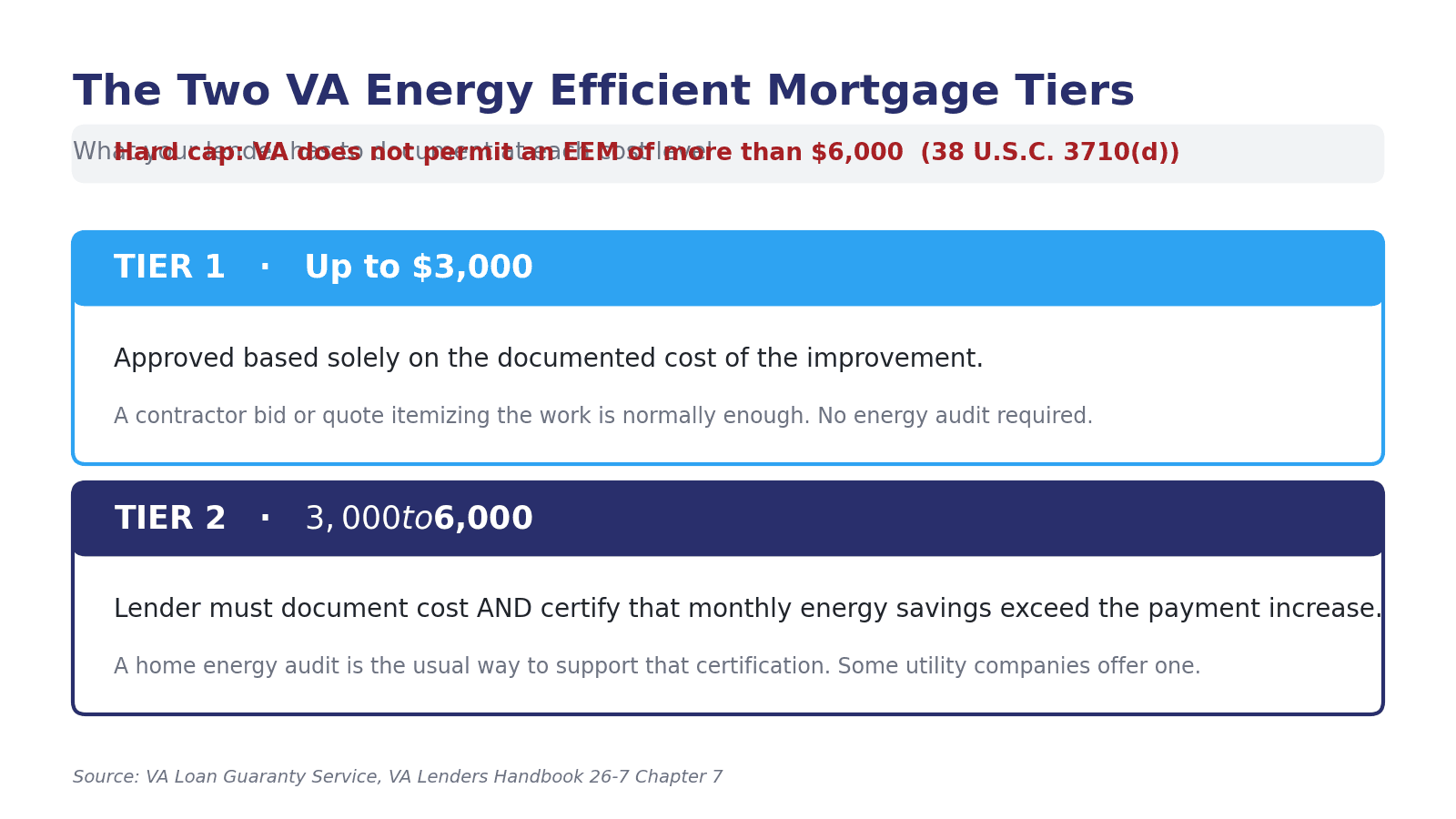
Under $3,000 you document cost. Above it, savings have to beat the payment increase. Source: VA Loan Guaranty Service.
In practice, the first tier is easy. Get a contractor bid, hand it to your lender, and the cost documentation is the whole test.
The second tier asks a harder question: will the energy this work saves each month be worth more than what it adds to your payment? That is where a home energy audit earns its keep. The VA notes that veterans may choose to hire a qualified person or firm to conduct an energy audit and identify recommended improvements, and that in some areas the utility company offers this service, sometimes free.
What Qualifies, and What Does Not
The VA Lenders Handbook 26-7, Chapter 7 gives examples of eligible improvements. The list is not exhaustive, but it sets the pattern.
- Solar heating and cooling systems
- Weather stripping or caulking
- New or additional insulation
- Storm windows, storm doors, or both
- Vapor barriers
The exclusions are just as clear. An EEM cannot be used for:
- New construction
- Luxury items such as hot tubs or spas
- Improvements that do not reduce energy consumption
- Appliances or other non-permanent fixtures
The line the VA is drawing is between permanent efficiency and everything else. A heat pump bolted into the house is a candidate. A new refrigerator is not, even if it carries an efficiency label, because it is an appliance rather than a permanent fixture.
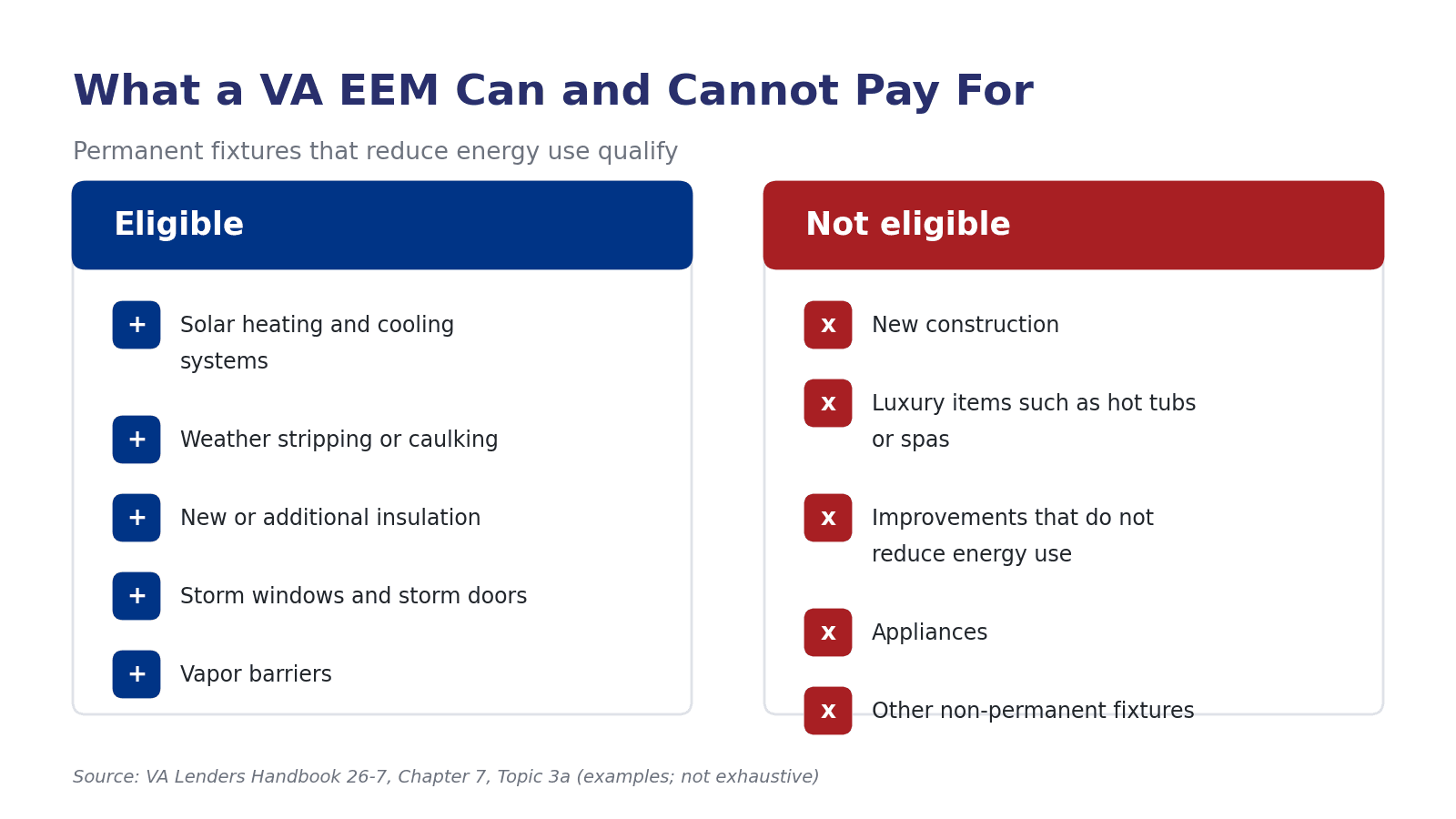
Permanent fixtures that cut energy use qualify. Appliances, luxury items, and new construction do not.
How the Money Actually Reaches the Contractor
You do not get a check at closing. Generally, improvements must be completed within six months of loan closing, and the funds are held in escrow until the lender verifies the work is finished and sends written notification to the VA.
Escrow here means a neutral account holding the money until conditions are met. If you want the mechanics of that in more detail, our guide to escrow in real estate walks through it.
Two planning notes follow from the six-month rule. Line up your contractor before closing, not after, so the schedule is real. And confirm with your lender in writing how the draw works at their shop, because the VA sets the outer rules while each lender runs its own escrow process.