A divorce decree can say exactly who keeps the house. What it cannot do on its own is change whose name is on the mortgage, or free up the veteran's VA entitlement to buy again. Those are separate steps, handled by the lender and the VA, and skipping them is how people end up years later discovering they still cannot get a second VA loan because their entitlement is still tied to a home they no longer live in.
Here is what actually happens to a VA loan during divorce, and the specific steps that resolve it.
The Decree Decides the Home. It Does Not Decide the Loan.
A divorce court can award the house to either spouse, but the mortgage is a separate contract between the borrower and the lender. If both spouses' names are on the original VA loan, both remain legally responsible for it to the lender until something changes that, regardless of what the decree says about who keeps the property. This is the detail that catches people off guard: a decree that says "spouse keeps the house" does not, by itself, remove the other spouse's name or liability from the loan.
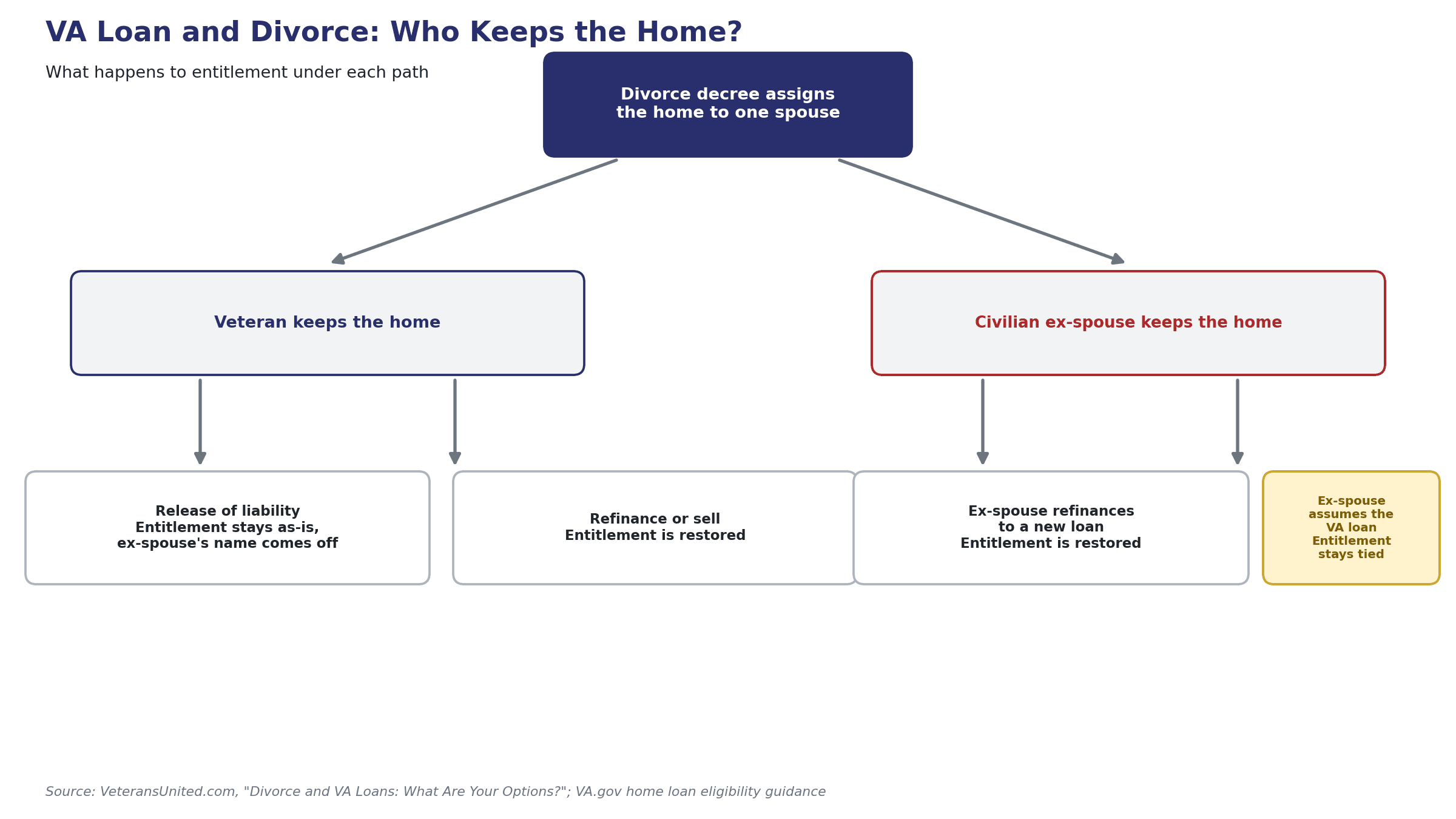
Which path you take determines whether the veteran's entitlement is freed up for a future purchase. Source: VeteransUnited.com; VA.gov.
If the Veteran Keeps the Home
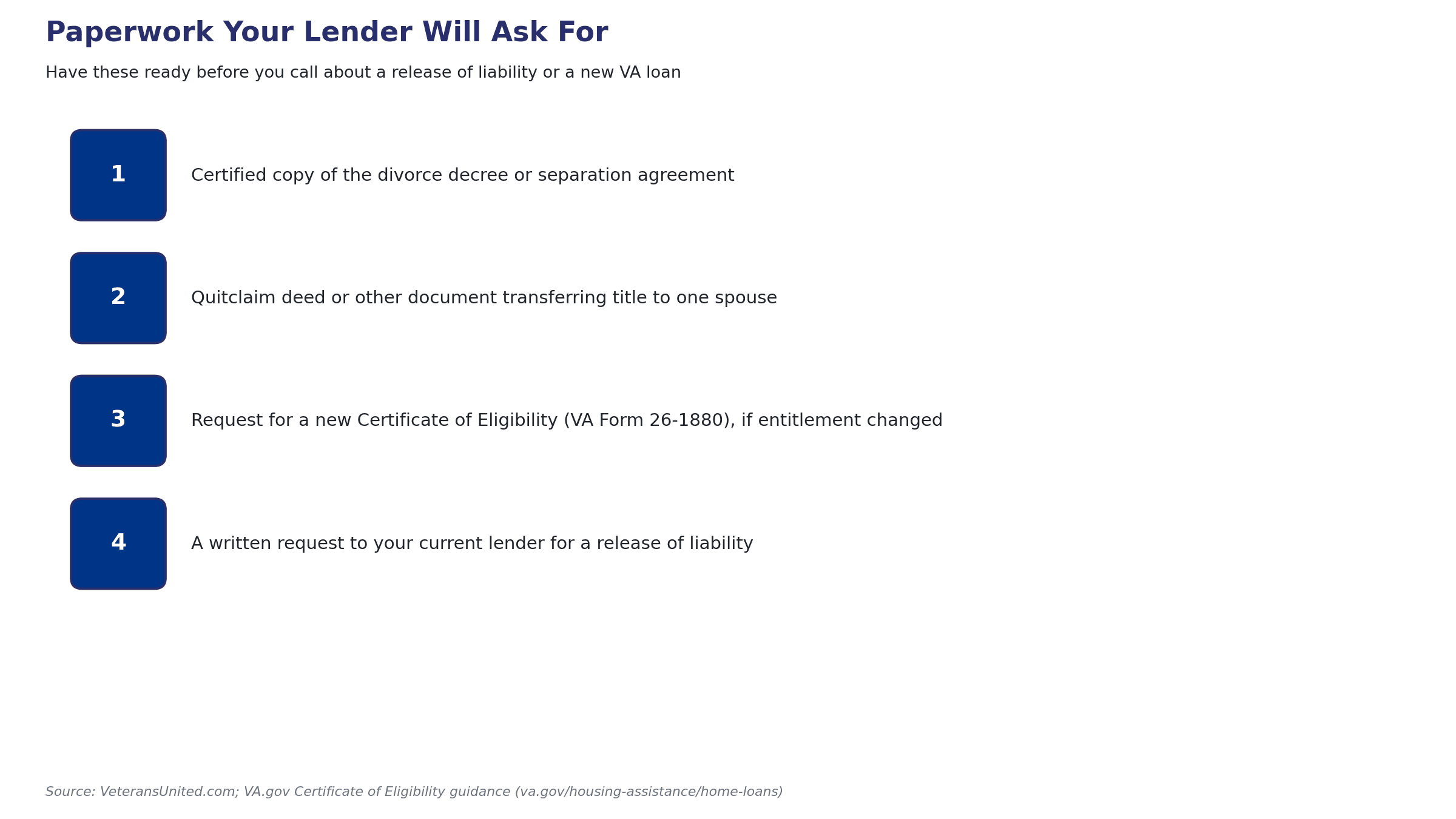
There are two common paths. The lender no longer requires a formal loan assumption to remove a civilian ex-spouse from liability when the divorce decree awards the property to the veteran; instead, a release of liability can take the ex-spouse's name off the debt while the loan itself stays in place. That requires a copy of the divorce decree or separation agreement showing the veteran was awarded the property, plus a legal document transferring ownership, typically a quitclaim deed. This path removes the ex-spouse's liability, but it does not by itself restore the veteran's used entitlement.
The other path is a refinance, either a VA Interest Rate Reduction Refinance Loan if rates have improved, or a VA cash-out refinance, to remove the ex-spouse from the loan and take sole ownership under a new loan in the veteran's name only. A full refinance does restore entitlement tied to the original loan, since the original debt is paid off.
If the Civilian Ex-Spouse Keeps the Home
A civilian, non-veteran ex-spouse who keeps the house has two options as well, and they land very differently for the veteran's entitlement. If the ex-spouse refinances into a new loan in their own name, whether VA-eligible or not, the original VA loan is paid off and the veteran's entitlement tied to it is restored, freeing it up for a future purchase.
If instead the ex-spouse assumes the existing VA loan rather than refinancing, the loan itself continues, and the veteran's entitlement stays tied to that property until the assumed loan is paid off in full. Assumption can make sense when the ex-spouse cannot qualify for a new loan on their own or when the existing rate is well below current market rates, but it is worth being clear-eyed that this path leaves the veteran's entitlement locked up, sometimes for years, even after the divorce is final.
Restoring Entitlement for Your Next VA Loan
Restoration happens once the underlying debt on the original property is resolved: the veteran refinances off the loan, the home is sold outright, or a release of liability plus payoff clears the original obligation. If a former spouse who is also a veteran assumes the loan using their own entitlement, that can restore the first veteran's entitlement as well.
If you already know you will want to buy again with a VA loan and your entitlement is not yet free, ask about second-tier entitlement before assuming you have to wait. Depending on your county's loan limit and how much entitlement is still tied up, you may be able to buy again with a portion of your entitlement remaining. Our guide to two VA loans at once and how second-tier entitlement works covers the math.