
Once your offer is accepted, the VA (Department of Veterans Affairs) loan appraisal is one of the biggest steps between you and your keys. A VA loan appraisal is an independent review that does two jobs at once: it estimates what the home is worth, and it checks that the property meets the VA's basic safety and livability rules. Understanding the VA loan appraisal helps you avoid surprises, especially when you are racing a report date. This guide explains what the appraiser looks for, how the appraisal differs from a home inspection, and what happens if the value comes in low or the home needs repairs.
What a VA Loan Appraisal Does
Every VA-backed purchase requires an appraisal ordered through the VA system and completed by a VA-assigned appraiser. The appraisal sets the maximum loan amount the VA will guarantee, and it confirms the home is safe, sound, and sanitary enough to be worth that loan.
The appraiser visits the property, measures it, photographs it, and compares it to recent nearby sales to reach an opinion of value. The final figure lands in a document called the Notice of Value, which your lender uses to finalize the loan. To keep your appraisal on schedule, have your Certificate of Eligibility and pre-approval ready before you go under contract.
VA Appraisal vs. Home Inspection
Buyers often mix these up, but they are not the same thing, and you usually want both.
| VA appraisal | Home inspection | |
|---|---|---|
| Who requires it | The VA and your lender | Optional, chosen by you |
| Main purpose | Confirm value and basic safety | Report the home's condition in detail |
| Who pays | Buyer (a seller can agree to cover it) | Buyer |
| Depth | A broad look at value and major issues | A close look at systems and defects |
The VA is clear on this point: an appraisal is not an inspection. VA's homebuying guide recommends a separate home inspection to check the property's condition. VA backs the loan; it does not guarantee the condition of the house. An inspector can look more closely at heating, cooling, plumbing, electrical, and roofing systems before you commit to the purchase.
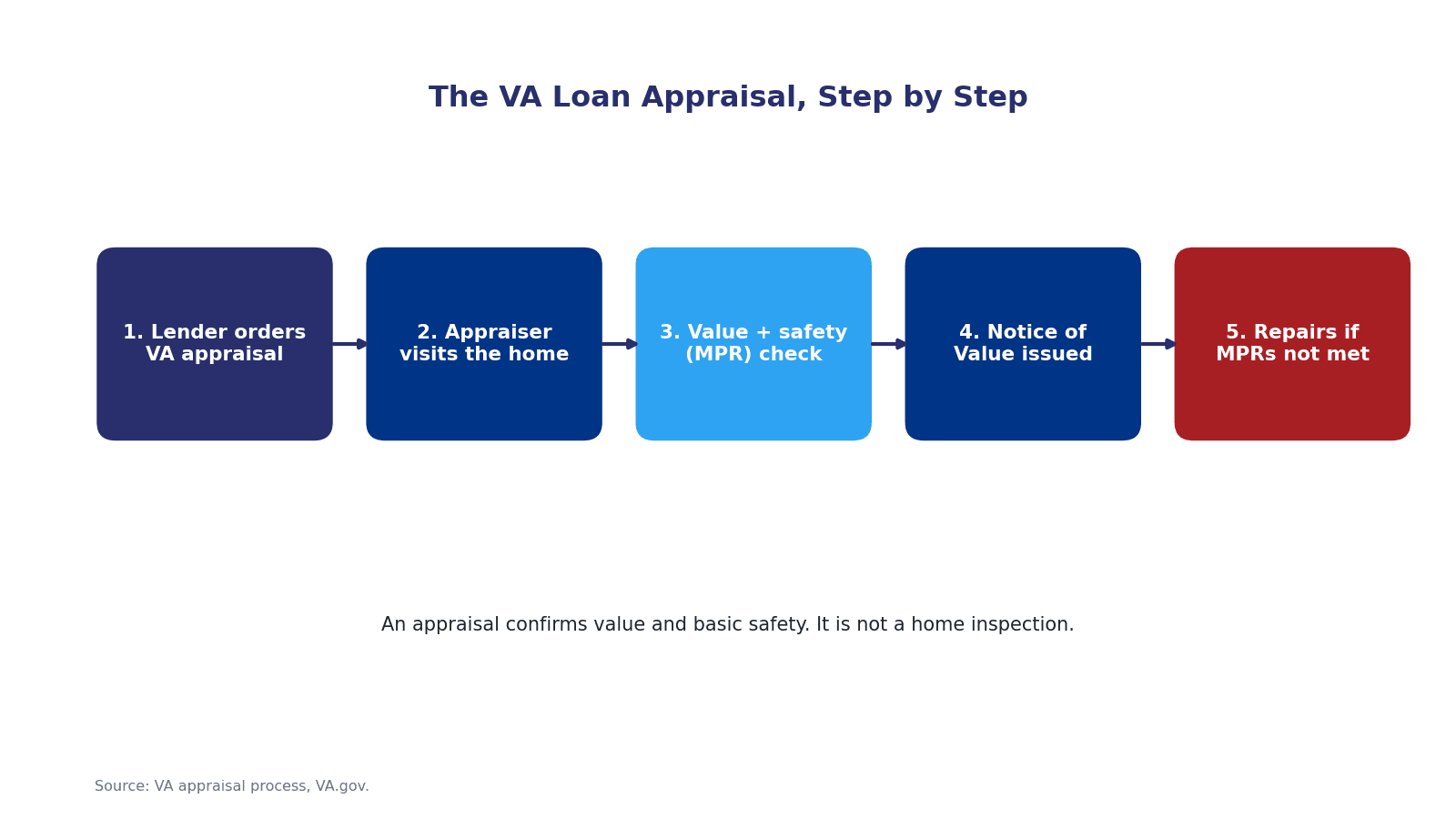
The VA appraisal moves through five basic steps. Source: VA appraisal process, VA.gov.
Minimum Property Requirements
The safety side of the appraisal is built around the VA's Minimum Property Requirements, or MPRs. These are the conditions a home must meet to protect your health and safety and to keep the property a sound investment. The VA's Minimum Property Requirement overview covers the full list, but common items include:
- Safe and reliable heating, water, and electrical systems
- A roof and structure in sound condition, with no major leaks
- No exposed wiring or obvious safety hazards
- Safe access to the home from a public or private street
- No standing water or drainage that threatens the foundation
If the appraiser sees something that does not appear to meet MPRs, VA rules say the appraiser recommends repairs, not a separate inspection. The item usually must be fixed before the loan can close. Many small repairs are handled by the seller as part of the deal, which is one more reason to work with an agent who knows VA transactions.
Planning Your Next Move?
Connect with Veteran & Military Spouse Real Estate Agents and VA Loan Experts You Can Trust.
Ready to start your search with the appraisal in mind? Connect with a VeteranPCS lender to get pre-approved before you make an offer.
The Tidewater Process
Sometimes the appraiser believes the home may appraise for less than the agreed sale price. Before finalizing a low value, the appraiser uses a step called Tidewater. VA's report on appraisal delivery describes a 48-hour window to submit sales data that supports the price. The appraiser notifies the lender's named point of contact, who gathers the information. If that data changes the picture, the value may hold. If it does not, the appraisal comes in low, and you move to the next step.
What Happens If the Appraisal Comes In Low
A low appraisal is not the end of the deal. You generally have a few options:
- Ask the seller to lower the price to match the appraised value.
- Pay the difference in cash between the price and the appraised value.
- Meet in the middle, with a smaller price cut and a smaller cash contribution.
- Request a Reconsideration of Value if you have strong sales data the appraiser missed.
Because the VA loan requires no down payment, a low appraisal is one of the few moments a VA buyer may need extra cash. A good agent will help you weigh these choices. See who else supports you in our guide to the VA loan home-buying team, and get the wider view in our complete guide to buying your first home with a VA loan.

Free First-Time Homebuyer Guide
Make your move less stressful with our step-by-step first-time homebuyer guide.
We respect your privacy. Unsubscribe anytime.Frequently Asked Questions
How long does a VA appraisal take? Timelines vary by region and demand, but many appraisals are completed within one to two weeks of being ordered. Busy summer PCS season can add time, so order early.
How much does a VA appraisal cost? The fee is set by region and paid at or before closing. It is one line item in your overall closing costs. Learn more in our guide to VA loan closing costs.
Can I use my own appraiser? No. The VA assigns an independent appraiser through its system to keep the value objective. You can, however, hire your own private home inspector.
Does a VA appraisal guarantee the home has no problems? No. The appraisal checks value and basic safety, not the full condition of the home. A separate home inspection is the right tool for that.
The Bottom Line
The VA loan appraisal protects both you and the VA by confirming the home is worth the loan and safe to live in. It is not a home inspection, so plan to hire your own inspector for a full look at the property. Know the steps, order early, and lean on a lender and agent who handle VA loans every day, and the appraisal becomes one more box checked on the way home.
Connect with a VeteranPCS lender to start your pre-approval, or find a military-experienced agent who can guide you through the appraisal.
Have a friend house hunting on VA loan? Share this guide so they know what to expect at appraisal time.
This content is for informational purposes. Consult a professional for personal financial decisions.