When you get orders, a hard question comes up fast: do you sell the home you own now, or keep it and buy again at your next base? Many military families assume they have to sell because they used their VA (Department of Veterans Affairs) loan already. Good news: you can often have two VA loans at once. The tool that makes it possible is called second-tier entitlement, and this guide explains how it works in plain language.
This is one of the most useful and least understood parts of the VA loan benefit. Let's break it down.
Yes, You Can Use the VA Loan More Than Once
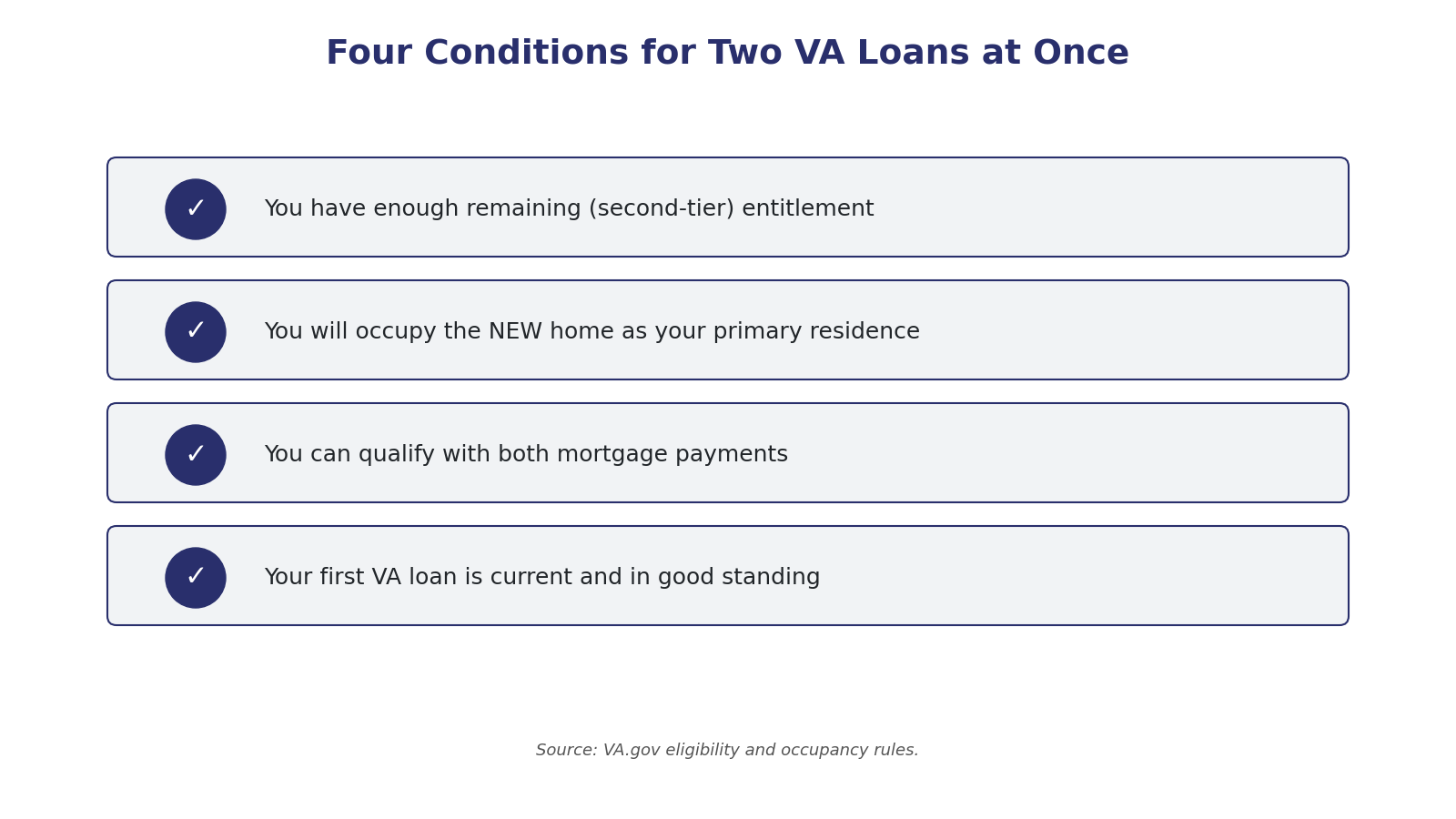
There is no limit on how many times you can use your VA loan benefit over a lifetime, as long as you meet the rules each time. According to the VA, you can reuse the benefit when you occupy the home, financially qualify, and have enough entitlement left. You do not have to pay off and sell your first VA-financed home before you buy again.
That last point is the key to holding two loans at the same time. If you have entitlement remaining, you can keep your current home, rent it out, and use a second VA loan to buy at your new duty station.
How Second-Tier Entitlement Works
Entitlement is the amount the VA promises to repay your lender if you default. When your first VA loan is still active, part of your entitlement is tied up in that home. What is left over is your second-tier entitlement, also called bonus entitlement.
Here is the math the VA uses, straight from its loan limits page. Take your county's one-unit loan limit and multiply it by 25 percent to find your maximum guaranty. Then subtract the entitlement you already used on the first home. What remains is what you can put toward a second zero-down loan. Lenders generally want your entitlement plus any down payment to cover at least 25 percent of the new loan.
An example makes it clear. Say your county limit is the 2026 baseline of $832,750. Multiply by 25 percent to get about $208,188 in maximum guaranty. Suppose your first VA loan was $200,000, which used $50,000 of entitlement. Subtract that, and you have about $158,188 of entitlement left. Multiply that remaining entitlement by four, and you get roughly $632,750, the largest second loan you could take with no money down. If the new home costs more than that, you would put 25 percent down on the amount above the line.
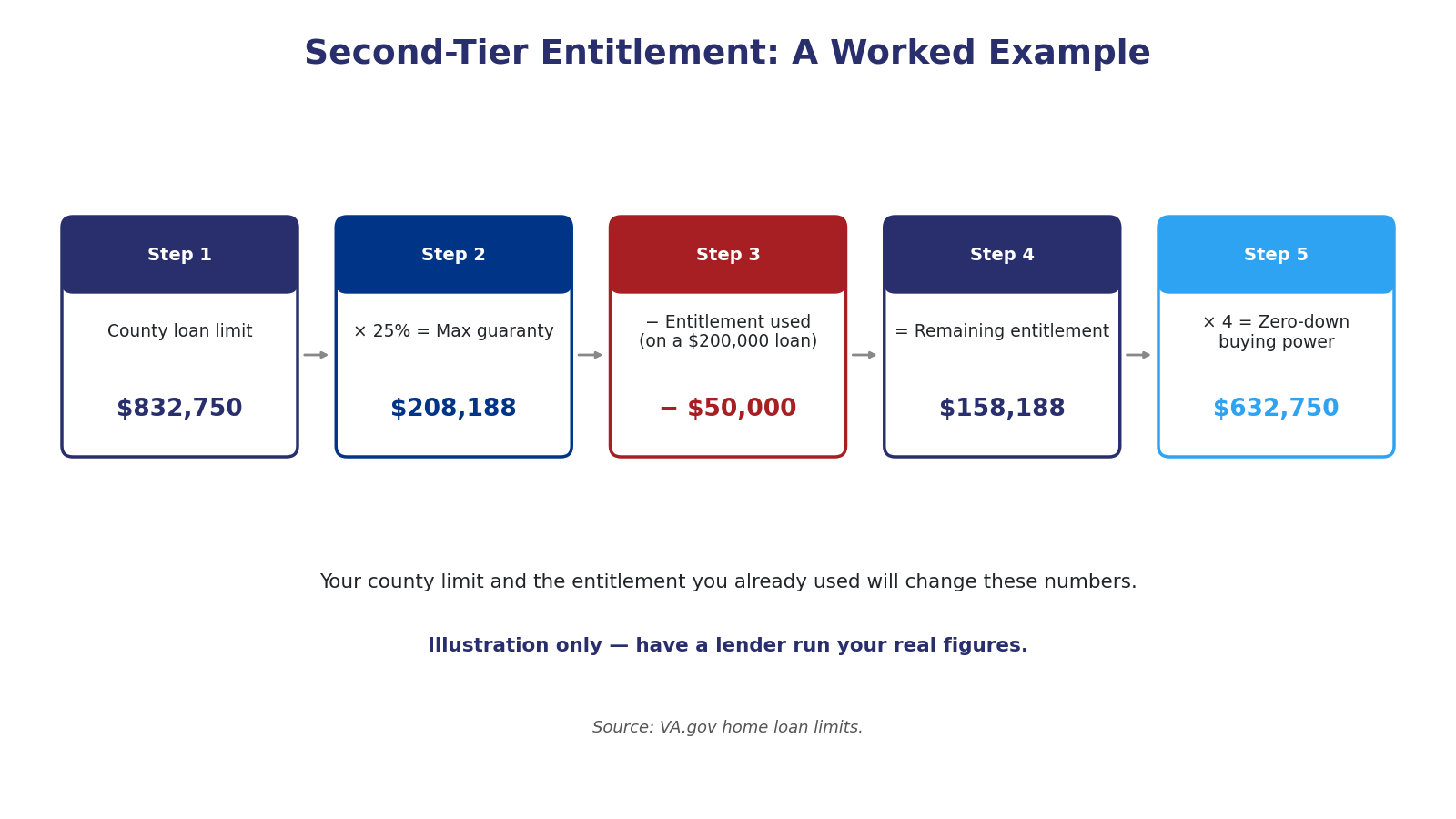
An illustration of how second-tier entitlement is calculated. Your county limit and entitlement used will differ, so confirm your own numbers with a lender. Source: VA.gov.
These figures are an example, not a quote. Your county loan limit and the exact entitlement you used will change the result, so a lender should run your real numbers. For a deeper walk-through of the limits themselves, see our 2026 VA loan limits guide, and for the fundamentals, read how VA loan entitlement works.
The Occupancy Rule Is What Makes This Legal
Two VA loans at once only works because of how the VA treats occupancy. A VA loan is for a primary residence, not an investment property. You must intend to move into the new home, usually within 60 days of closing, and make it your main home.
Your first home is different. You already lived in it as required, and PCS orders are the classic, VA-approved reason to move out and rent it. You do not lose the loan or break any rule by renting the old place once you are ordered to a new station. Our guide to VA loan occupancy requirements during a PCS covers this in detail, so you stay on the right side of the rules.
Keep and Rent, or Sell? Weigh It Honestly
Second-tier entitlement gives you the option to keep your home, but it is not always the right call. Renting from a distance means being a long-distance landlord, covering repairs, and carrying the mortgage during any vacancy. Selling frees up cash and fully restores your entitlement for the next purchase.
Run the numbers both ways. Ask whether the rent would reasonably cover the mortgage, taxes, insurance, and a cushion for repairs. Our guide on whether to rent or sell your home when you PCS lays out the trade-offs so you can decide with clear eyes.